Taper Mullet Fade Every Variation, Style, and Barber Guide You Need
The taper mullet fade has moved well beyond its retro roots. Today, it sits at the intersection of precision barbering and genuine personal style a modern mullet haircut that balances structure at the front and sides with length and movement at the back. Whether you’re exploring this look for the first time or trying to refine a cut you already love, this guide covers everything: the different taper placements, the best variations for your hair type and face shape, and exactly how to talk to your barber so you walk out with what you actually wanted.
This is not a surface-level style gallery. You’ll find real explanations of what separates a low taper from a mid taper, why burst fades behave differently from skin fades on a mullet shape, and how to maintain the cut between appointments without losing the silhouette. By the end, you’ll know precisely which taper mullet fade works for your hair and how to get it right every time.
What Is a Taper Mullet Fade and How Is It Different from a Regular Fade?
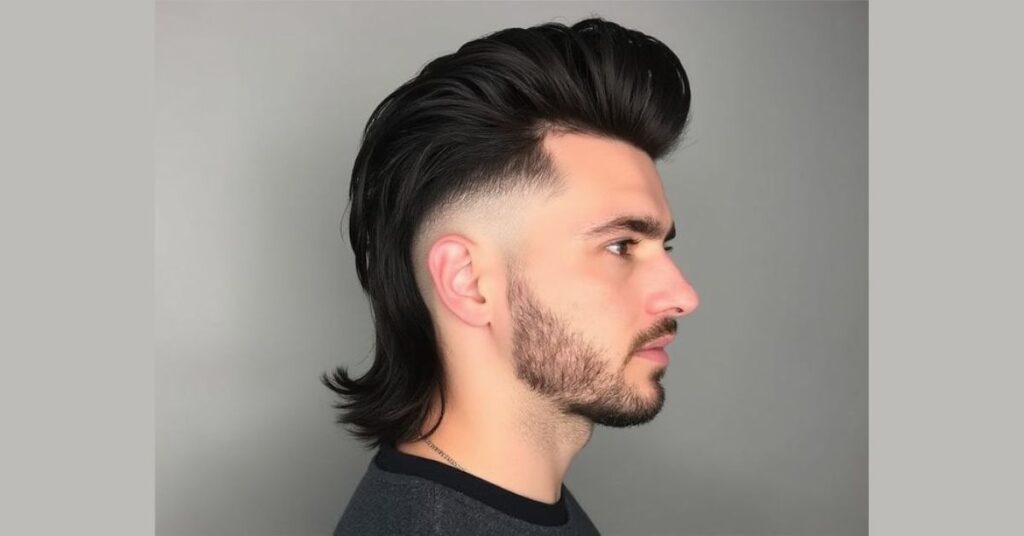
The term taper mullet fade blends three distinct elements, and understanding each one separately is the foundation for choosing the right cut. A mullet haircut for men keeps length at the back while the top and sides are cut shorter the classic “business at the front, party at the back” structure. The taper and fade refer specifically to how the sides and neckline are handled.
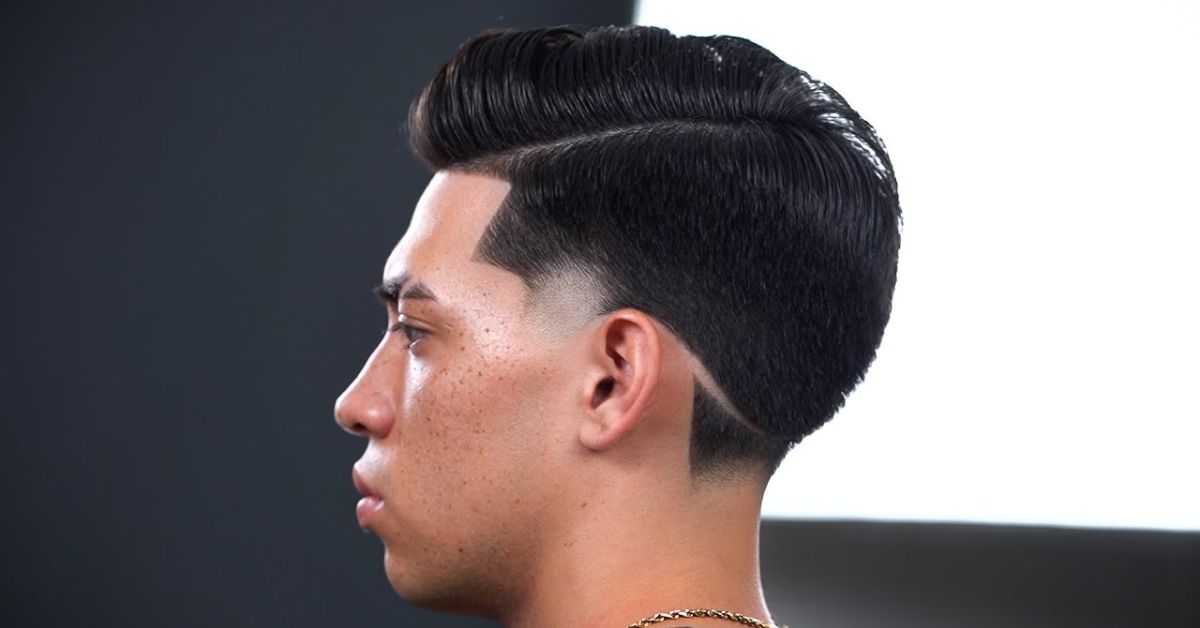
A taper is a gradual reduction in hair length, typically working from slightly longer hair near the temples down toward the neckline. It follows the natural growth pattern of your hair without cutting down to the skin. A fade, on the other hand, takes the hair down to near-zero or skin level and blends upward. When you combine both as in a taper fade mullet you get a cut that transitions smoothly from skin or very short hair at the base, blending up through the sides, while the back maintains the signature length of a mullet. The result is a clean finish at the perimeter and a sharp silhouette that looks intentional rather than overgrown.
Taper vs Fade vs Taper Fade Definitions Simplified
It helps to think of it as a spectrum. A pure taper keeps a little length at the base it blends down to short but not to skin. A pure fade cuts to the skin at the base and blends upward, creating high contrast. A taper fade combines the two: there’s a fade element at the very base, but it transitions more gradually than a standalone fade. On a mullet, this distinction matters because the neckline sits right where the longer back section begins. A well-executed taper fade at the neckline creates a crisp line that separates the back length from the sides cleanly, without a harsh step or a visible join.
Where the Taper Sits on a Mullet
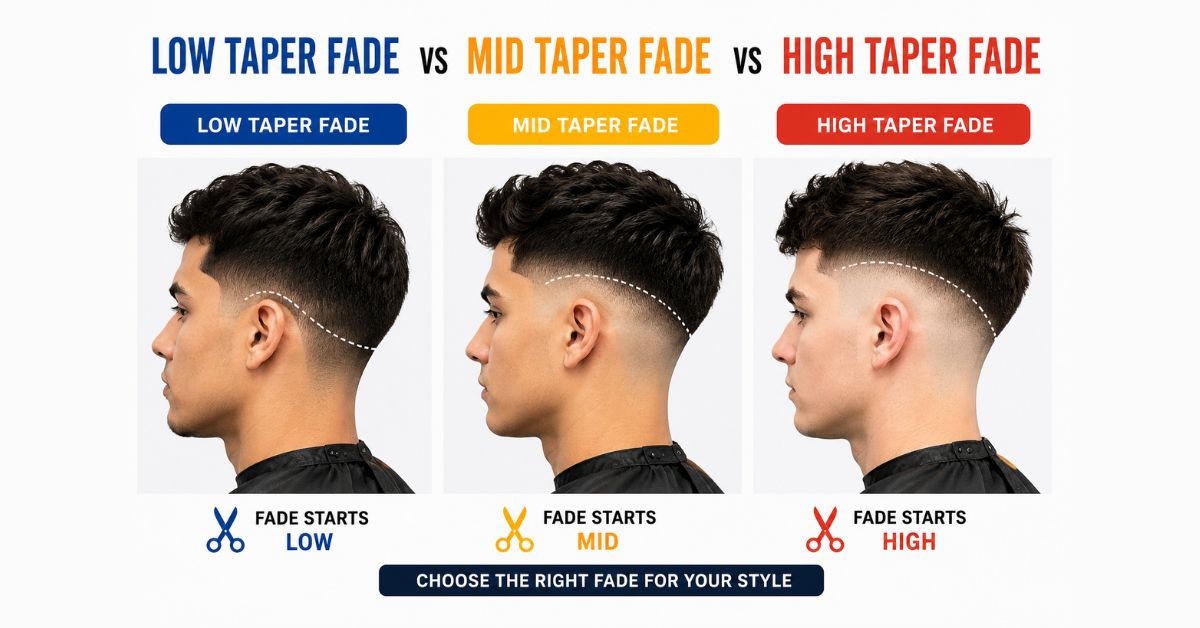
The placement of the taper how high up the head it reaches is what creates the biggest visual difference between variations. A low taper sits just above the ears and along the natural neckline. A mid taper rises to around the middle of the sides. A high taper climbs close to the temples and the upper sides, creating more dramatic contrast. On a taper fade mullet, this placement shapes the overall hair silhouette and determines how bold or subtle the cut looks. Lower tapers feel more relaxed and workplace-friendly. Higher ones make a much stronger statement haircut.
How the Mullet Shape Works with a Taper Fade
The length at the back is what defines the mullet element. Barbers typically leave anywhere from 2 to 5 inches of length at the nape, depending on how dramatic you want the contrast. The top section is usually cut shorter often with texture or layers added to create hair movement and prevent the front from looking flat against the longer back. The taper fade on the sides acts as the connecting piece, blending the short top into the longer back in a way that looks deliberate and modern. Without that fade, the mullet can look choppy. With it, the entire cut becomes cohesive.
The 6 Main Types of Taper Mullet Fade
Not all taper mullet fades look the same. The variation in taper placement, fade depth, and silhouette shape creates genuinely different looks each with a different feel and suitability for different hair types and lifestyles. Here are the six main versions you’ll encounter at any skilled barbershop.
Low Taper Fade Mullet Clean and Conservative
The low taper fade mullet keeps the fade action tight it only touches the hair just above the ear line and along the natural neckline. The result is a subtle, refined look. Most of the side hair stays at a moderate length, and the contrast between sides and back is noticeable but not dramatic. This is the most workplace-appropriate version of the cut and works particularly well for thick hair, where the taper helps manage density without creating too sharp a line. If you’re new to mullet hairstyles for men, the mullet low taper fade is the safest starting point it’s easy to wear across different contexts, and if you decide you want more contrast later, it’s simple to adjust upward.
Mid Taper Fade Mullet The Balanced Choice
The mid taper fade mullet raises the fade to the midpoint of the sides roughly level with the upper ear. This creates noticeably more contrast than the low version while still maintaining a sense of control and wearability. It works across most hair density levels and is particularly effective on wavy hair, where the natural texture of the top and back benefits from the cleaner, shorter sides as a visual anchor. Most experienced barbers would describe this as the most versatile version of the cut it’s bold enough to look intentional without requiring the same level of commitment as a high taper.
High Taper Fade Mullet Bold and High-Contrast
The high taper fade rises close to the temples, leaving only the top section and the back with meaningful length. The contrast is dramatic you’re looking at a significant visual difference between the closely cropped sides and the longer top and back. This version suits people who want a genuinely edgy hairstyle for men and are comfortable with a look that reads as fashion-forward. It works best on straight hair or medium curls, where the length contrast is clearly visible. On very tightly coiled hair, the high taper can sometimes make the top section appear wider than intended, which may or may not be the effect you’re after.
Taper Burst Fade Mullet Curved and Eye-Catching
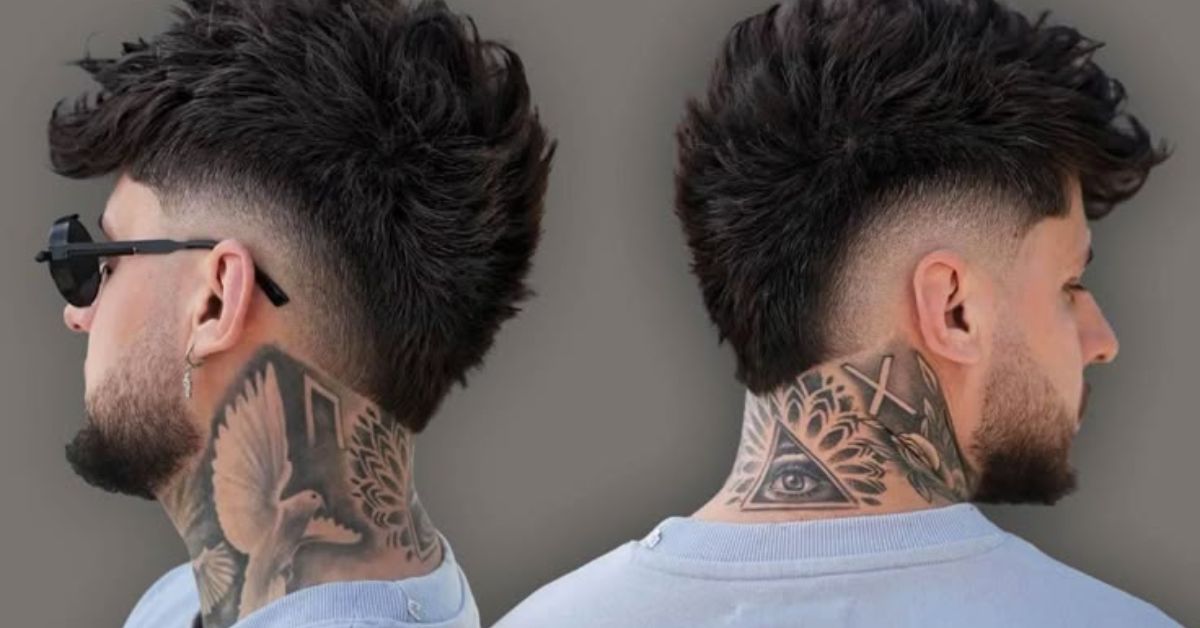
The taper burst fade mullet introduces a curved fade that radiates outward from behind the ear, following the natural arc of the head. Instead of a straight horizontal fade line, the burst creates a semicircular shape that frames the ear and creates a rounded silhouette. This is a more advanced barbering technique and gives the cut a distinctly artistic quality. It pairs exceptionally well with the mullet because the curved burst fade echoes the rounded shape of the longer back section, creating visual harmony. This version suits curly mullet and wavy mullet styles particularly well the natural texture of the back section looks intentional rather than unkempt when the fade has that rounded framing shape.
Skin Taper Fade Mullet Ultra-Sharp Definition
Here, the fade cuts all the way to the skin at the base typically around the neckline and above the ears before blending upward. The contrast is immediate and stark. The skin fade mullet delivers the highest level of visual sharpness and is the most maintenance-intensive version, since skin shows stubble growth within days. That said, for those who visit the barbershop regularly, this version creates the cleanest possible hair silhouette and arguably the most dramatic expression of the taper mullet fade concept. It works across most hair types but looks especially striking on straight hair, where the clean lines of the skin fade mirror the sleekness of the top section.
Drop Taper Fade Mullet Follows the Natural Neckline
The drop fade gets its name from the way the fade line “drops” down behind the ear, following the natural curve of the neckline rather than going straight across. On a mullet, this is particularly elegant it allows the longer back section to flow more naturally from the sides because the transition line curves gently rather than cutting across at a fixed height. The drop taper fade mullet feels slightly softer than a straight high taper and suits layered mullet styles or shaggy mullet shapes, where the overall aesthetic is more textural and organic.
Modern Taper Mullet Fade Styles for Every Hair Type
One of the most overlooked aspects of choosing a taper mullet fade is how significantly hair texture and density affect the final result. The same cut executed on thick straight hair versus fine wavy hair will look and behave very differently. Matching the right variation of the cut to your actual hair type is what separates a great result from a frustrating one.
Taper Mullet Fade on Thick Hair Removing Bulk Without Losing Shape
Thick hair gives you a lot of volume to work with, but without the right cutting technique, a taper fade mullet on thick hair can look heavy and shapeless particularly in the back section. The key is for your barber to use point cutting or texturizing shears through the back length to remove interior weight without shortening the overall length. This preserves the mullet silhouette while allowing the hair to sit and move naturally. A mid or high taper on the sides helps balance the bulk on top and back by keeping the sides closely cropped. Thick-haired clients also benefit from a textured mullet approach to the top section adding layers rather than leaving it blunt creates better proportions.
Taper Mullet Fade on Thin Hair Adding Visual Volume
The challenge with thin or fine hair is that a taper mullet fade can sometimes expose the scalp more than you’d like especially with a high fade. The solution is to keep the taper relatively low, which preserves more hair on the sides and creates the illusion of greater hair volume. At the back, leaving the length slightly longer rather than going for an extremely short mullet helps add visual weight. Products like sea salt spray add texture and grip to fine strands, making the hair appear thicker and more substantial throughout the day.
Taper Mullet Fade on Curly or Wavy Hair
Curly and wavy hair types interact with the taper mullet fade in uniquely rewarding ways. The natural hair movement of curls at the back creates an organic, textured length that looks full and expressive without extra effort. The challenge is managing shrinkage curly hair sits shorter when dry than it does when wet, so your barber needs to cut with that in mind. A taper burst fade mullet often looks particularly good on curly hair because the curved fade shape echoes the natural round silhouette of the curls. Use a curl enhancer or leave-in conditioner on the back section to keep curls defined and frizz-free.
Straight Hair Taper Mullet Fade Maximizing Clean Lines
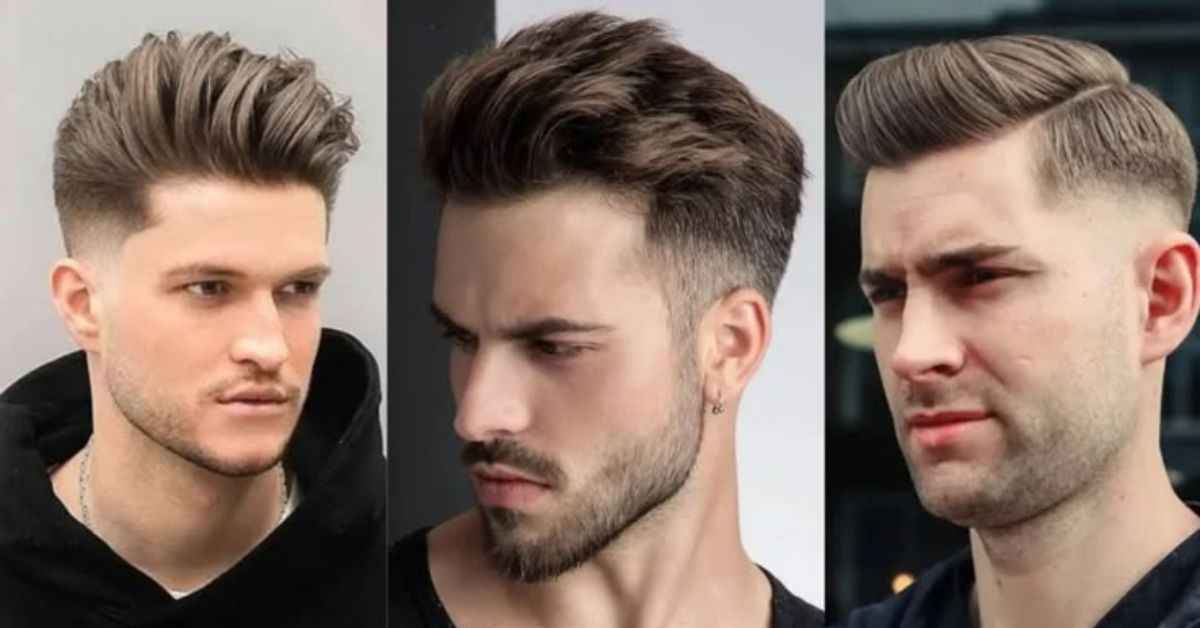
Straight hair shows every line and angle with perfect clarity, which makes it ideal for the more structured versions of the taper mullet fade. A skin taper or high taper looks especially sharp because the clean sides contrast directly against the sleek, flat back length. The potential downside is that straight hair can look flat in the back particularly if left blunt. Ask your barber to add subtle hair layers through the back length to create a sense of movement. A lightweight matte paste or texture cream worked through the top section prevents it from lying completely flat against the scalp and gives the overall cut more visual life.
Which Taper Mullet Fade Suits Your Face Shape?
Face shape is one of the most useful filters for narrowing down which version of a taper mullet fade will look best on you. The goal of any haircut is to complement and balance the natural proportions of your face not to fight against them.
Oval and Square Face Shapes Why Most Taper Mullet Variations Work
Oval faces are the most universally versatile shape for haircuts, and the taper mullet fade is no exception. The balanced proportions of an oval face mean you can pull off anything from a low taper to a high skin fade mullet without the risk of the cut making your face appear too long, too wide, or disproportionate. Square face shapes characterised by a strong jawline and a wide forehead of similar width also work well. The longer back of the mullet adds length to the overall silhouette, which softens the squareness slightly, while the taper keeps the sides clean and defined.
Round Face Shapes Choosing a Higher Taper for Length
Round faces benefit from haircuts that add visual height or length to counterbalance the width. A mid taper fade mullet or high taper variation works well here because the shorter, closely cropped sides visually slim the face, while the height and length of the top and back sections draw the eye upward and downward. Avoid very low tapers on round faces they keep too much volume on the sides and can make the face appear wider.
Oblong Face Shapes Keeping the Taper Low for Balance
An oblong or rectangular face is already long and narrow, so the goal is to add width and avoid adding more length. A low taper fade mullet is the better choice here it keeps more hair on the sides, which adds horizontal visual weight and balances the longer proportions of the face. A textured fringe or fuller top section also helps widen the perceived face width. Avoid extremely high tapers or very long back sections, which both emphasise the vertical length of the face.
Diamond and Heart Face Shapes Using Fringe to Soften
Both diamond and heart face shapes feature a narrower chin and jawline with a wider forehead or temples. A taper mullet fade works well, but adding a textured fringe or softer front section helps balance the narrower lower face by drawing attention forward. A mid taper keeps the overall proportions in check. Pairing the cut with a sculpted beard can also help widen the chin area and balance the overall face shape.
Taper Mullet Fade vs Other Mullet Fade Styles Key Differences
Understanding how the taper mullet fade compares to other popular variations helps you make a more informed decision before sitting in the barber’s chair. These three comparisons cover the most common points of confusion.
Taper Mullet Fade vs Skin Fade Mullet Which Is More Versatile?
The main difference is about commitment and contrast. A skin fade mullet takes the sides down to bare skin, creating a high-contrast look that reads as deliberately bold. A taper mullet fade keeps some hair on the sides and creates a more gradual transition. In practical terms, the skin fade requires more frequent maintenance expect to return to the barber every two to three weeks to keep the skin sections clean. The taper fade mullet, particularly at low to mid placement, can hold its shape for three to four weeks before looking noticeably grown out. For most people, the taper variation offers better everyday wearability.
Taper Mullet Fade vs Burst Fade Mullet Shape and Feel
The burst fade mullet is defined by its curved, semicircular fade shape that radiates from behind the ear. The taper fade mullet uses a more linear fade that follows horizontal lines across the sides. The burst creates a rounder, more artistic silhouette and often has a louder visual impact. The taper is cleaner and more structured. Neither is objectively better it’s a question of whether you want the cut to look precise and architectural (taper) or fluid and expressive (burst).
Taper Mullet Fade vs Undercut Mullet Contrast vs Blend
An undercut mullet keeps a clear disconnected line between the top section and the sides there’s no blending or gradual transition. The taper mullet fade eliminates that hard line through gradual blending. The undercut delivers an extremely sharp, sharp contrast aesthetic and tends to look more avant-garde. The taper mullet fade looks more polished and barbered the blending creates a more refined finish that works across more settings.
How to Ask Your Barber for a Taper Mullet Fade
Miscommunication at the barbershop is one of the most common reasons people leave with a haircut they didn’t actually want. A professional barber can execute any variation of the taper mullet fade but they need specific information from you to do it correctly. Here’s exactly how to approach that conversation.
The Exact Terms to Use at the Barbershop
Start by confirming the overall shape: tell your barber you want a mullet haircut with length kept at the back. Specify how much length either in inches or by comparison (for example, “I want about 3 inches of length at the nape”). Then specify the taper placement: low, mid, or high. Next, clarify the fade style standard taper fade, burst fade, drop fade, or skin fade. Finally, describe the top section: do you want it textured, do you want a fringe, do you want layers? The more specific you are about each element, the better your result.
Here’s a practical example of what to say:
“I’d like a taper fade mullet mid taper on the sides, faded down to about a number one or two at the base. Keep around three inches of length at the nape. On top, I want it textured with some layers not too flat.”
That single description gives your experienced barber everything they need.
Reference Photos and What to Point Out in Them
A reference photo remains the single most effective communication tool in a barbershop. Bring two if possible one showing the side profile (so your barber can see the taper height and fade depth) and one showing the back (so they can see the length and shape of the mullet section). When showing the photo, point specifically to the elements you want to replicate: the height of the fade, the length at the nape, and whether the top section is textured or smooth.
Common Miscommunications and How to Avoid Them
The most frequent mistake is asking for a “fade” without specifying the placement. To your barber, a fade can mean anything from a very low skin fade to a mid-drop fade the term alone doesn’t tell them enough. Similarly, saying “keep the back long” is vague. Specify length in inches or guide your barber by showing exactly where on your neck you want the length to end. Avoid saying “just a bit” or “not too much” without a reference these phrases mean different things to different people. Specific measurements and clear terminology remove the ambiguity.
How to Style a Taper Mullet Fade at Home
Getting a great cut is only half the work. The styling routine you follow at home determines whether the taper mullet fade looks sharp and intentional or flat and shapeless between barber visits. Fortunately, this is a relatively low-maintenance haircut once you understand the basic principles.
Products That Work Best with a Taper Fade Mullet
The right product depends on your hair type and the look you want. Here’s a quick guide:
| Hair Type | Recommended Product | Effect |
| Thick / coarse | Matte clay or matte paste | Control and definition without weight |
| Fine / thin | Sea salt spray + light texture cream | Adds grip and visual thickness |
| Curly / wavy | Curl enhancer + leave-in conditioner | Definition and frizz control |
| Straight | Matte paste or light styling cream | Adds texture and prevents flatness |
Apply product to slightly damp hair for the most even distribution. On straight or thick hair, work product through the top section with your fingers before using a blow dryer to build shape and volume. On curly or wavy hair, apply curl enhancer to the back length while still damp, then allow it to air-dry for the best definition.
Step-by-Step Styling Routine for the Party-Back Section
The back section of a taper mullet fade is the defining element and it needs the most attention during styling. For straight or wavy hair, apply a small amount of styling cream or sea salt spray to the back length, then use a round brush while blow-drying downward to smooth the hair and encourage it to fall naturally. For curly hair, scrunch the curl enhancer into the back section and allow it to air-dry without touching it disrupting curls during drying causes frizz and loses definition.
Styling the Front Fringe, Curtain, or Textured Crop Options
The front section of your taper mullet fade shapes the overall impression of the cut. A textured fringe pushed slightly forward creates a contemporary, fashion-forward look. A curtain-style front, where the hair parts loosely in the middle and sweeps to each side, gives the cut a more relaxed and effortless quality. A French crop mullet aesthetic where the fringe sits more flatly across the forehead with a sharper perimeter looks more structured and intentional. Choose the front styling that matches the overall vibe you want the cut to project.
How to Style a Taper Mullet Fade on Humid or Rainy Days
Humidity is the main enemy of a styled taper mullet fade, particularly for straight or fine hair that tends to go flat, and for wavy hair that can frizz unpredictably. On high-humidity days, use a small amount of matte clay or matte paste with slightly stronger hold than your usual product this gives the hair enough structure to resist moisture in the air. For curly hair, a light layer of conditioner over the styled back section creates a protective layer that keeps the curl pattern intact even in damp conditions.
Maintaining a Taper Mullet Fade Keeping It Sharp Between Cuts
A taper mullet fade is, by design, a precision haircut. The taper and fade sections grow out relatively quickly, and once they do, the entire silhouette starts to look soft and undefined. Understanding how to manage the cut between appointments is what separates a well-maintained taper mullet fade from one that just looks like an overgrown haircut.
How Often to Book a Taper Fade Touch-Up
For skin fade mullets, plan for a barber visit every two to three weeks. The skin sections show growth almost immediately, and once the stubble appears, the sharpness of the cut diminishes quickly. For mid and low taper fade variations, a three to four week schedule works well for most people. This allows the fade to soften slightly which can actually look good in the early grow-out phase before it starts to lose its shape entirely. If you’re maintaining a high taper, four weeks is usually the outer limit before the cut starts looking unintentional.
How to Handle the Grow-Out Phase Without Losing the Shape
Between weeks three and five, the taper sections will have grown enough to blur the lines but not enough for a completely fresh cut to look different from a touch-up. During this phase, use a matte clay with stronger hold on the sides to keep the hair lying flat and close to the head this mimics the visual effect of the shorter taper and extends the life of the shape. Avoid volumising products on the sides during this phase, as they’ll accentuate the grow-out and make the cut look messier than it is.
At-Home Maintenance: Neckline Cleanup Between Appointments
The neckline taper is the first area to visibly grow out on a mullet. A stray neckline can make the entire cut look neglected. Some barbers will offer a free neckline cleanup between full appointments it’s always worth asking. If you’re comfortable doing it yourself, a small cordless trimmer can be used to keep the very edge of the neckline clean. However, avoid attempting to maintain the fade itself at home unless you have experience an uneven line of demarcation is far more visible and harder to fix than a slightly grown-out natural fade.
How to Grow Into a Taper Mullet Fade Transition Timeline
One of the most common questions around this cut is how to get there from wherever your hair currently is. The answer depends significantly on your starting point whether you’re working from a short cut or transitioning from longer hair.
Starting from a Short Back and Sides What to Expect at Each Month
If you currently have a short all-over cut, the transition to a taper mullet fade requires growing the back section while keeping the sides managed. Here’s a realistic month-by-month expectation:
Month 1–2: The back will start to gain some length, but it won’t look like a mullet yet. Keep visiting your barber for regular taper fades on the sides this maintains neatness and keeps the transition intentional rather than accidental.
Month 3–4: The back should now have enough length to start looking deliberately longer than the sides. This is when the silhouette of the mullet begins to emerge. Your barber can start shaping the back section to give it the right form.
Month 5–6: By this point, you should have enough length at the back for a fully shaped taper mullet fade. The front and top section should be kept at your preferred length throughout the mullet’s length differential between back and sides is what defines the cut, not overall length.
Starting from Longer Hair How to Shape Toward a Taper Mullet
If you already have medium or long hair, the transition is actually faster and more straightforward. Your barber can remove length from the sides and top while keeping the back section long essentially sculpting the mullet shape from existing length. The taper fade is then applied to the sides during the same appointment. In many cases, the taper mullet fade can be achieved in a single session from medium-length hair.
The Awkward Phase and How to Style Through It
Every grow-out process has an awkward phase typically around weeks six to ten when the back is getting longer but not yet long enough to look fully intentional. During this phase, lean into textured styling: use sea salt spray to add definition and prevent the growing back section from looking stringy or flat. A light texture cream through the top section prevents the overall shape from looking shapeless. The key is making the grow-out look deliberate textured, styled, and worked-with rather than simply neglected.
Frequently Asked Questions
Is a mullet or taper fade better?
Neither is objectively better it depends on your style goal. A mullet adds length and drama at the back, while a taper fade focuses on clean, blended sides. Combined, they create one of the most versatile modern cuts available.
Is a mullet haircut halal?
Scholarly opinions vary. Most mainstream Islamic scholars permit the mullet as long as the cut is neat and doesn’t imitate a specific non-Muslim religious or cultural identity. Always consult your own religious authority for personal guidance.
Is a taper fade haram?
A taper fade alone is not widely considered haram. Some scholars advise against the qaza style shaving parts of the head while leaving others but a gradual taper fade that blends smoothly is generally viewed as permissible by most contemporary scholars.
Is a mullet a chapri haircut?
In South Asian slang, “chapri” refers to a flashy or low-taste style. A mullet can carry that label in certain cultural contexts, but the modern taper mullet fade is a globally recognised, barber-crafted cut worn across fashion, music, and sport far removed from that association.
Conclusion
The taper mullet fade earns its place as one of the most versatile and genuinely stylish men’s hairstyles available right now. It’s a cut with real range from the understated low taper fade mullet that works in virtually any setting, to the high-contrast skin fade or burst fade versions that make a clear aesthetic statement. What ties them all together is the quality of execution: clean blending, intentional taper placement, and a back section that’s shaped rather than simply left to grow.
Choosing the right variation comes down to three key factors: your hair type, your face shape, and the level of maintenance you’re genuinely prepared to commit to. A mid taper fade mullet on wavy hair styled with sea salt spray requires very little daily effort. A skin fade version demands regular barber visits to stay sharp. Both are excellent choices but only if they fit your actual lifestyle.
Take this guide into your next barber appointment. Know your taper placement, your fade depth, and your preferred front styling before you sit in the chair. The more specific you are, the better the result. A skilled barber can execute all of these variations they just need you to tell them exactly what you want.