Taper Burst Fade The Complete Guide to the Haircut Everyone Is Asking For
If you’ve sat in a barber’s chair recently and struggled to describe exactly what you want, you’re not alone. The taper burst fade is one of the most requested men’s haircuts right now and also one of the most misunderstood.
Barbers hear “burst fade,” “taper fade,” and “taper burst fade” used interchangeably every day, but these are distinct techniques. Getting them confused means walking out with the wrong cut. This guide breaks down everything you need to know: what the taper burst fade actually is, how it differs from similar styles, which variation suits your hair type and face shape, and how to maintain it between visits.
What Exactly Is a Taper Burst Fade?
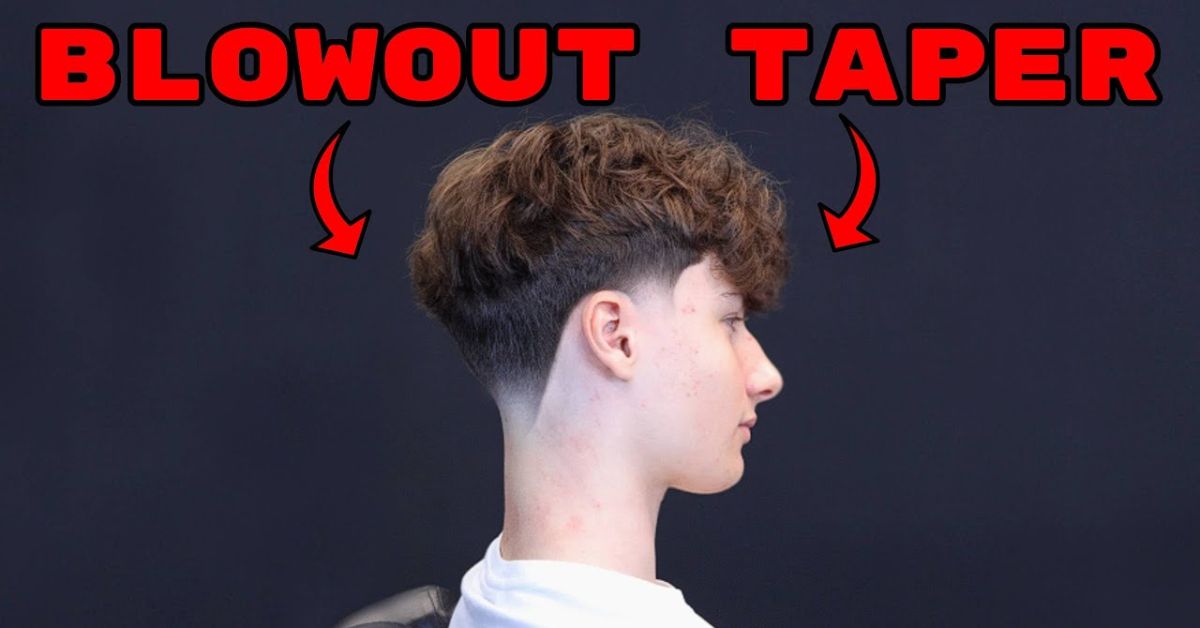
The taper burst fade haircut is a hybrid technique that combines two separate barbering methods into one cohesive style. To understand it, you need to know what each component does on its own.
A burst fade creates a semicircular arc of graduated length that radiates outward from behind the ear, following the natural curve of the head. A taper, on the other hand, refers to a gradual reduction in hair length typically along the sides and nape that blends cleanly without necessarily going down to the skin.
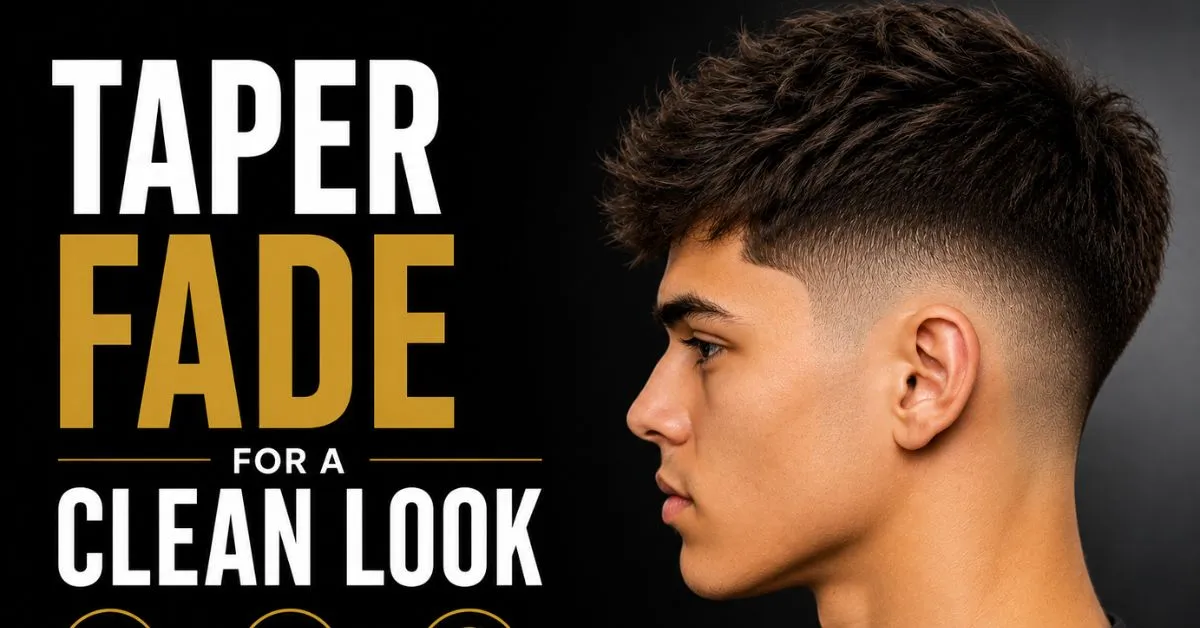
When you combine both techniques, you get a burst taper fade: a cut where the arc-shaped graduation of the burst fade is controlled and softened by the tapering method. The result is a seamless fade transition that follows the curve of the ear while maintaining a cleaner, more graduated finish along the neckline.
This makes the taper burst fade a more refined version of the standard burst fade less abrupt, more polished, and significantly more versatile.
What makes this cut particularly interesting from a barbering standpoint is the skill it demands. The barber must maintain the arc shape of the burst while simultaneously managing the gradient from the sideburn area down to the neckline.
It’s precision work. A standard burst fade can be executed with a more aggressive clipper-over-comb approach, but the burst fade taper requires careful blending across multiple guard sizes typically from a #0 or #0.5 at the base up to a #2 or #3 as the length transitions into the top.
How the Taper Element Changes the Classic Burst Fade
Without the taper, a burst fade creates a strong, often dramatic arc that can feel visually bold. The skin or near-skin fade at the base is highly visible, and the transition from short to long is comparatively sharp. The taper element softens this. It introduces a gradual length progression that makes the overall cut feel more natural more like the hair is growing intentionally out of the head rather than being aggressively sculpted.
For men who want the shape and structure of a burst fade but work in professional environments where ultra-sharp fades might feel too casual, the clean taper burst fade is often the answer. It delivers the distinctive arc silhouette without the high-contrast skin fade base that makes some styles feel more street-barbershop than boardroom-adjacent.
Read More About : Taper Mullet Fade Every Variation, Style, and Barber Guide You Need
The Anatomy of the Cut Guard Numbers and Transition Zones
Understanding the technical side helps you communicate more clearly with your barber. In a typical taper burst fade, the progression works roughly like this: the lowest point of the arc (just behind the ear and at the nape) starts at a #0 or bare clipper for skin fade variations, or a #0.5 to #1 for softer taper versions.
Moving upward along the arc, the guard size increases #1.5, then #2 before the hair blends into the natural length on top. The arc itself usually spans a semicircle from just above the ear down around the back of the head, with the highest point of the fade sitting roughly at the temple.
The neckline finish is where the taper component does its most important work. A clean, tapered neckline sometimes called a faded neckline avoids the hard line that a basic block neckline would create. Instead, the hair is feathered outward gradually, so the transition from faded skin to neck hair is smooth. This is one of the reasons the barber burst fade taper requires more time in the chair than a basic fade. It’s a cut that rewards patience.
Taper Burst Fade vs. Other Fade Styles Clear Differences Explained
One of the most common points of confusion in the barbershop is distinguishing between the burst fade vs taper fade and understanding where the taper burst fade sits between them. These aren’t interchangeable terms each describes a different technique with a different visual outcome. Knowing the difference helps you ask for exactly what you want and walk out satisfied.
Taper Burst Fade vs. Standard Burst Fade
The standard burst fade is all about the arc. It creates a semi-circular fade around the ear that blends into a natural or longer style above. It’s bold, it’s distinctive, and when paired with something like a mohawk or mullet, it’s visually striking. The taper burst fade, however, adds a tapering element that reduces the length more gradually. The arc is still there that’s the signature of the style but the transition is smoother, and the neckline is cleaner. If the standard burst fade is a statement, the taper burst fade is the polished version of that same statement.
Taper Burst Fade vs. Drop Fade
A drop fade follows the curve of the head downward behind the ear, dipping lower at the back of the skull. The key difference is in the path of the fade line. A drop fade curves downward; a burst fade curves outward in an arc that radiates around the ear. The taper burst fade keeps that outward arc but softens the base. This is important because the arc shape of the burst fade tends to complement longer styles on top particularly mullets and mohawks more naturally than a drop fade does.
Taper Burst Fade vs. Regular Taper
A regular taper haircut reduces hair length gradually from the top down to the sides and neckline without necessarily going close to the skin. It’s one of the most classic, versatile men’s cuts. The taper burst fade takes the clean blending principle of the taper and applies it within the specific arc framework of the burst fade. In a regular taper, the graduation runs fairly uniformly around the head. In the taper burst fade, that graduation is concentrated in the semicircular arc zone around the ear, creating a more distinctive shape.
Taper Burst Fade vs. Skin Fade
A skin taper fade goes all the way down to bare skin at the lowest point and blends upward. The taper burst fade can incorporate a skin base this is common in high-contrast styles but it doesn’t have to. Many taper burst fades stop at a #0.5 or #1, which keeps some hair at the base and results in a softer overall look. This distinction matters for men with sensitive skin around the neckline, since a full skin fade in that area can cause irritation with frequent touch-ups.
Low, Mid, and High Taper Burst Fade Which Level Is Right for You?
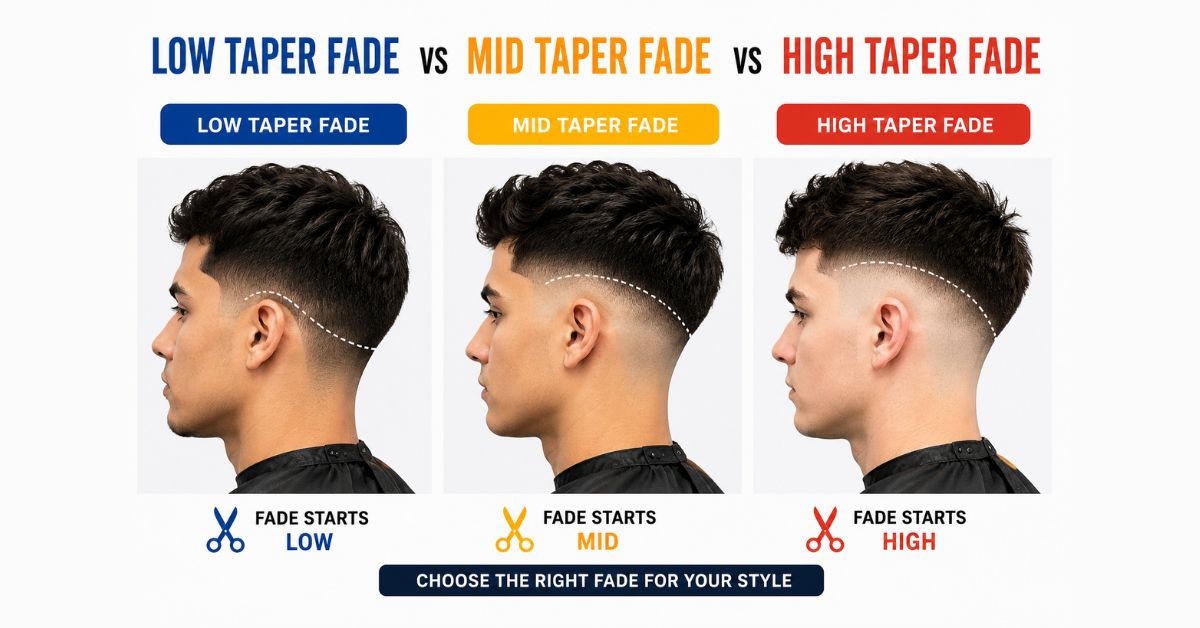
The “level” of your taper burst fade refers to how high the fade arc sits on the head. This single decision dramatically changes the character of the finished cut. A low burst fade with taper gives a subtle, understated result. A high version creates a bolder, more dramatic profile. Most men fall somewhere in the middle. Here’s how each level works in practice.
Low Taper Burst Fade
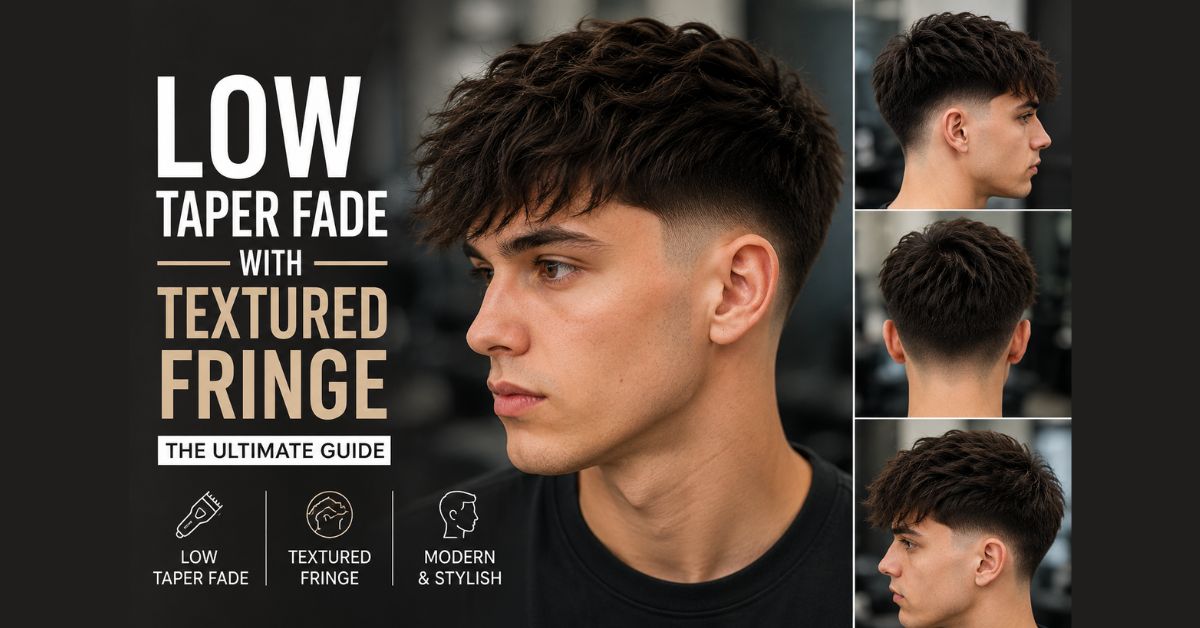
The low taper burst fade keeps the arc close to the natural hairline roughly level with the top of the ear or slightly above it. The fade is contained to the lower portion of the head, which means the transition from faded to full-length hair happens over a smaller area. This creates a more conservative, workplace-appropriate look. It’s also the most forgiving level for first-timers, since a low arc is easier for barbers to adjust if you decide you want something slightly different.
For men with oval or rectangular face shapes, a low taper burst fade works particularly well because it doesn’t add unnecessary height or width to the silhouette. It’s also a strong choice for men who want a low maintenance haircut the low arc grows out more evenly, which means you can stretch touch-up appointments to every four weeks without the cut looking obviously grown-out.
Mid Taper Burst Fade
The mid taper burst fade is the most popular level, and for good reason. The arc sits roughly at the midpoint of the head above the ear but below the temples which gives the cut both shape and versatility. It works with almost any style on top: a textured crop with burst fade, a comb over, a quiff, or a simple textured top. The mid level provides enough contrast to look intentional and modern without the high-maintenance demands of a higher arc.
This is also the level that most reference photos you’ll find online depict, which makes it easier to communicate to your barber. If you’re unsure which level to choose for a first taper burst fade haircut, mid is almost always the safe and satisfying starting point.
High Taper Burst Fade
The high taper burst fade pushes the arc up toward the temples, creating a more dramatic, high-contrast look. The faded area covers a large portion of the side of the head, which draws the eye upward and makes styles on top particularly mohawks and longer textured styles look especially sharp. This is the most visually striking level, but it comes with a trade-off: it grows out the fastest and requires touch-ups every two to three weeks to maintain its shape.
If you have a round or square face shape, a high taper burst fade can work in your favor by adding visual height and elongating the silhouette. That said, this level is best suited to men who are committed to regular barber visits and don’t mind the upkeep.
Best Hairstyles to Pair With a Taper Burst Fade
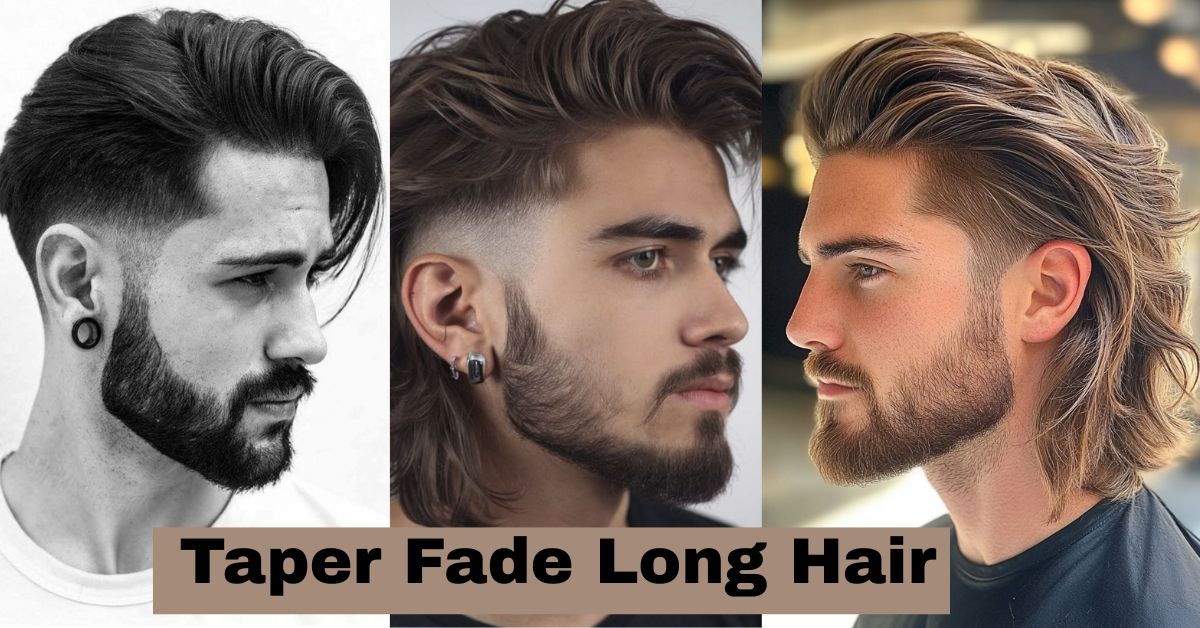
The burst taper fade haircut is not a standalone style it’s a foundation. What you do with the hair on top defines the overall look. The good news is that this cut is extraordinarily versatile. It suits short, medium, and long hair on top, and it works across a wide range of aesthetics from casual to sharp.
Taper Burst Fade with a Mullet
The burst fade mullet taper is arguably the combination that brought the taper burst fade back into mainstream conversation. The modern mullet shorter on the sides and top, longer at the back creates a natural partnership with the burst arc, which frames the transition from short sides to long back hair. The arc essentially becomes the boundary between the cropped sides and the flowing back section. It’s a bold pairing, but when executed by a skilled barber, it looks intentional and genuinely contemporary.
Taper Burst Fade with Curly or Coily Hair
Curly hair burst taper fade styles work exceptionally well because the arc shape naturally complements the roundness of curl patterns. The fade creates a clean base that lets the curls on top take center stage without competing visual elements on the sides. Men with tighter coil patterns often find that the burst arc follows the natural contours of their head more flatteringly than a standard drop or skin fade does. The curly top burst fade is one of the most searched variations of this style for exactly this reason.
Taper Burst Fade with a French Crop or Edgar
Both the French crop and the Edgar cut feature a straight, horizontal fringe line at the front. This creates an interesting visual contrast with the curved arc of the taper burst fade straight lines on top, curved lines on the sides. The tension between those two geometric elements is what makes this pairing so visually effective. A textured crop with burst fade adds another dimension: the texture on top draws the eye while the clean arc frames the face.
Taper Burst Fade with a Mohawk
The burst fade mohawk taper channels a more experimental energy. The strip of hair running from the forehead to the crown is flanked on both sides by the high fade arc, which creates a clean, defined runway effect. The taper element softens what might otherwise be an aggressively sharp look, making it accessible to men who want something edgy but not extreme.
Taper Burst Fade with a Comb Over or Slick Back
For a more refined, professional aesthetic, pairing the taper burst fade with a comb over or slick back delivers a professional hairstyle that reads as polished rather than trendy. The arc provides enough visual interest to make the cut feel modern, while the combed-back top communicates control and intention. This pairing works especially well with the low or mid fade level.
Taper Burst Fade Designs Adding Patterns and Line Work
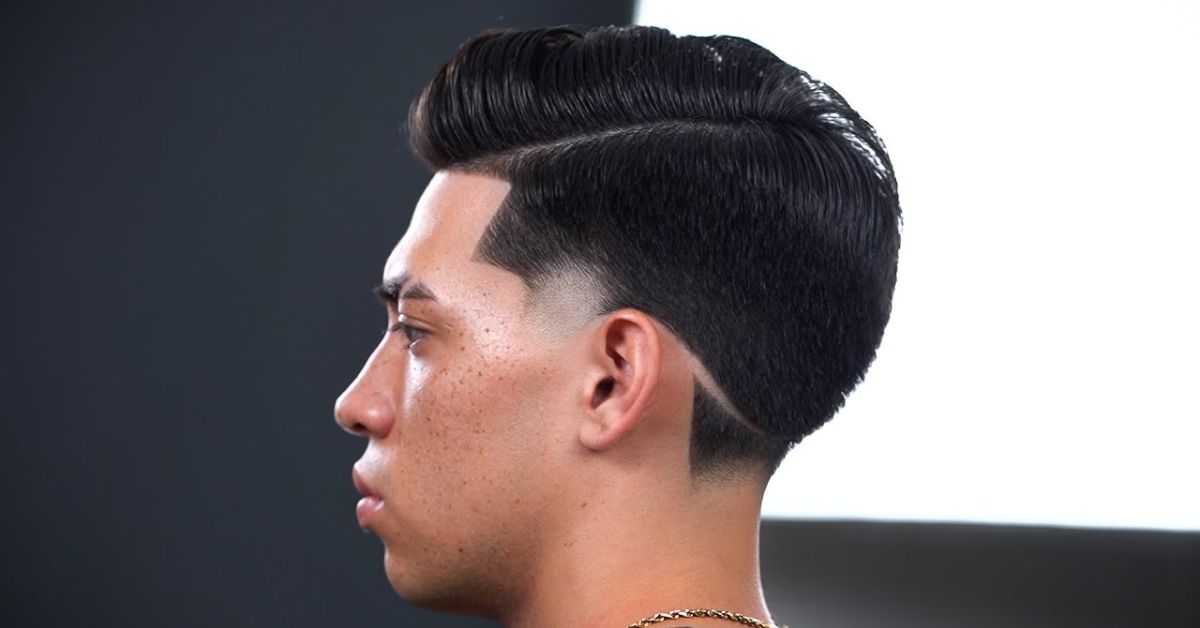
A burst fade design haircut takes the cut into genuinely artistic territory. Once the arc is clean and the fade is blended, a skilled barber can use a razor or detailing trimmer to add line work, geometric shapes, or custom patterns within the faded area. This is where the taper burst fade design becomes a form of personal expression rather than just a haircut.
Low taper burst fade design styles tend to incorporate thin lines that follow or intersect the curve of the arc. A single curved line etched just below the fade boundary, for example, can make the arc look sharper and more deliberate without adding visual noise. More complex designs geometric grids, lightning bolt details, or initials require more surface area and therefore suit mid or high fade levels better.
It’s worth noting that design work adds time and cost to the appointment. A standard taper burst fade might take 30 to 45 minutes in skilled hands; adding detailed line work can push that to 60 to 75 minutes. The designs also fade (in the visual sense) as the hair grows, so if you want crisp patterns, you’ll need touch-ups more frequently typically every two weeks.
Taper Burst Fade by Hair Type What Works Best
Not every hair type responds to this cut in the same way. The underlying technique stays consistent, but the visual result and the styling approach shift depending on whether your hair is straight hair burst fade taper territory or naturally textured.
Straight Hair
Straight hair shows every line and transition with total clarity. This is a double-edged advantage: when the fade is precise, it looks razor-sharp. When it’s slightly off, that’s equally visible. Men with straight hair often get the cleanest-looking taper burst fade results because the lines read with high definition. The downside is that straight hair lies flat, so styles on top need some product support to add volume or texture.
Wavy Hair
Wavy hair sits in an ideal middle ground. It has enough natural movement to add visual texture on top without the styling demands of tightly curled hair. The burst fade taper style softens slightly at the boundary of the arc because wavy hair doesn’t expose every millimeter of the transition this can actually make the blend look more natural and less clinical.
Curly and Coily Hair
As mentioned earlier, curly and coily hair and the taper burst fade are genuinely well-matched. The arc follows the natural shape of the head, and the curl pattern on top provides volume and movement that contrasts beautifully with the clean faded sides. The main technical consideration here is that curly hair tends to shrink significantly when dry, so the barber needs to account for shrinkage when setting the arc height. What looks like a mid fade on wet curly hair can read as a low fade once the curls spring back up.
Thick Hair
Haircut for thick hair considerations come into play with the burst fade because thick hair can resist blending if the barber doesn’t take the time to thin the transition zone properly. A good barber will use thinning shears or a texturizing technique in the mid-fade zone to ensure the graduation from short to long doesn’t look blocky. The finished result on thick hair, when done correctly, looks particularly full and rich.
Taper Burst Fade for Kids and Teens
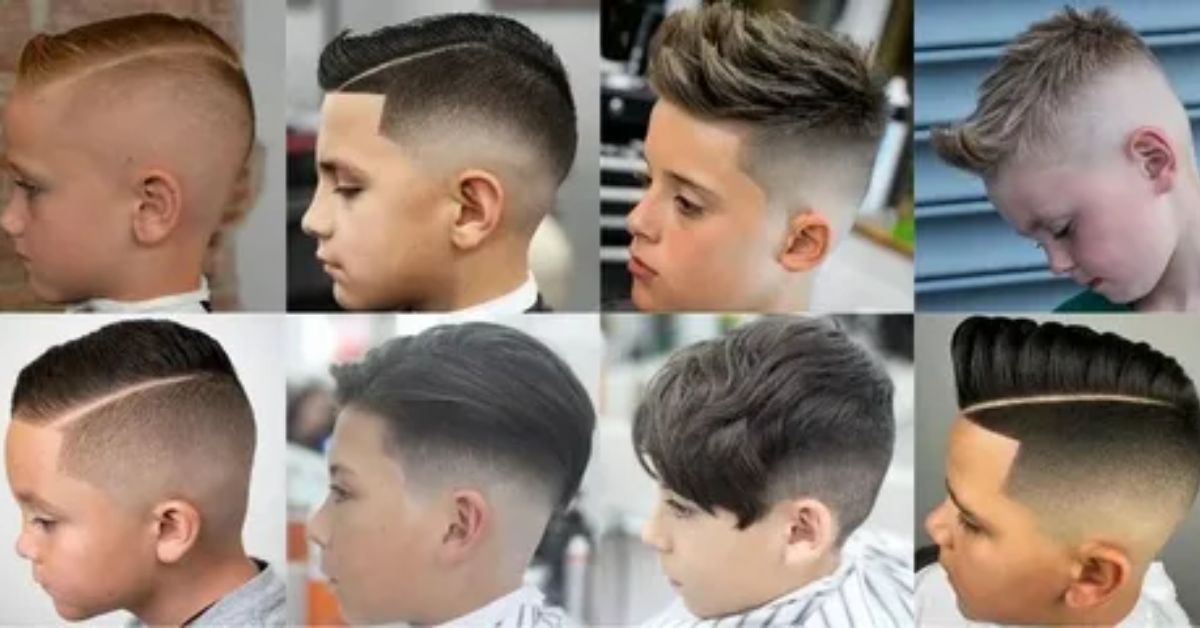
Children and teenagers can absolutely wear this cut, and it’s become increasingly popular among younger clients. The main adjustments are a softer arc (typically a low level) and stopping the fade at a #1 or #1.5 rather than going to skin. This produces a fresh burst fade look that’s age-appropriate and still sharp. For younger children, the session is also shorter, which helps with keeping them still in the chair.
Choosing the Right Taper Burst Fade for Your Face Shape
Face shape is one of the most useful guides when choosing which variation of the taper fade burst haircut to get. It’s not a rigid rule personal preference always plays a role but understanding the relationship between your face shape and the arc height can help you make a more confident decision.
| Face Shape | Recommended Level | Why It Works |
| Oval | Any level | Balanced proportions suit all arc heights |
| Round | Mid to High | Adds vertical height, reduces width emphasis |
| Square | Mid | Softens strong jawline without adding width |
| Oblong/Rectangular | Low | Keeps proportions balanced, avoids adding height |
| Diamond | Mid | Arc draws attention to cheekbones naturally |
The table above gives you a starting framework, but it’s worth discussing your specific proportions with your barber before committing. A good barber will look at your head shape in three dimensions, not just your face from the front.
How to Ask Your Barber for a Taper Burst Fade (Without the Guesswork)
Walking into the barbershop knowing exactly what to say saves time and prevents disappointment. The barber burst fade taper is a specific technique, and the more precise your language, the better your result.
The Exact Words to Use
A clear and complete request sounds like this: “I’d like a mid taper burst fade with a textured top, please. I want the arc to sit just above my ear, and I’d prefer the neckline to be tapered rather than blocked.” That single sentence covers arc height, top style preference, and neckline finish the three main variables the barber needs to execute the cut correctly.
Don’t simply say “burst fade” and leave the rest open. Many barbers will default to their own preferred interpretation, which may or may not match what you have in mind. Specifying the level (low, mid, high), the base finish (skin or tapered), and any design elements (plain or with line work) gives the barber a complete picture.
What Reference Photos to Bring and Where to Find Them
A reference photo is worth more than any verbal description. Bring images that show the cut from the front, back, and at least one side profile. The arc shape can look significantly different from different angles, and showing your barber all three views eliminates ambiguity. Social media platforms dedicated to barber shop haircut inspiration are excellent sources for reference images search specifically for “taper burst fade” alongside your hair type for the most relevant results.
Common Miscommunication Mistakes to Avoid
The most frequent mistake is asking for a “burst fade” when you actually want a taper burst fade. These are different. A standard burst fade may go closer to the skin and have a sharper arc than you’re expecting. Similarly, asking for a “taper” without mentioning the burst element will get you a standard taper cut great haircut, but not the arc-shaped result you’re after. Be specific, bring a photo, and ask your barber to confirm their understanding before they pick up the clippers.
How to Style a Taper Burst Fade at Home
The cut does most of the visual work, but knowing how to style it at home keeps it looking sharp between visits. A stylish taper fade haircut shouldn’t require 45 minutes of effort every morning. With the right routine and products, you can maintain a fresh burst fade look in under ten minutes.
Step 1 Prep With Clean, Towel-Dried Hair
Start with freshly washed hair. Apply shampoo and conditioner appropriate for your hair type this matters more than most men realize, because product-heavy hair from the day before won’t respond well to styling. After washing, towel-dry until damp but not dripping. This is your best styling window.
Step 2 Apply a Pre-Styler for Hold or Volume
A burst fade with textured top benefits from a pre-styler applied before blow-drying. If you want volume and lift, a lightweight mousse or texture powder works well. If you want hold without volume for a slick back or comb over a small amount of styling cream applied to damp hair before blow-drying sets the direction of the hair effectively.
Step 3 Blow-Dry to Set the Shape
Use a mid-heat setting and a round or paddle brush depending on your top style. Blow-dry in the direction you want the hair to sit. For textured styles, use your fingers instead of a brush to encourage natural movement. The blow-dry stage locks in the shape the finishing product applied afterward refines it.
Step 4 Finish With the Right Product for Your Look
For a matte, textured hairstyle finish, a texture clay or molding paste gives separation and definition without shine. For a sharper, more polished look, a light pomade or sea salt spray (for natural movement) works well. Apply a small amount less than you think you need work it through your palms first to warm it, then distribute evenly from roots to ends on top.
How to Maintain a Taper Burst Fade Between Barber Visits
Maintenance is where most men lose the sharp look they walked out of the barbershop with. A modern burst fade grows out quickly around the arc, and without attention, the clean gradient becomes undefined within a few weeks.
How Often Should You Get a Taper Burst Fade Retouched?
The answer depends on which level you chose. As a general guide:
- Low taper burst fade: Every three to four weeks
- Mid taper burst fade: Every two to three weeks
- High taper burst fade: Every two weeks
These are maintenance intervals for men who want the cut to look fresh. If you’re comfortable with a slightly grown-out look, you can stretch these timelines by a week. The neckline and the arc boundary are the first areas to show growth, so those are the reference points to watch.
At-Home Edge and Neckline Upkeep
Some men invest in a quality home trimmer to maintain the neckline between barber appointments. If you go this route, stick to the neckline and avoid attempting to touch the fade arc itself this is the area where amateur trimming can create visible unevenness that’s difficult for a barber to correct. A sharp neckline fade is the result of precise clipper work; maintain it conservatively at home or leave it entirely to the professional.
Daily Hair Care Routine to Keep the Style Fresh
A clarifying shampoo used once a week removes product buildup from the scalp and keeps the faded sides looking clean. On non-wash days, a dry shampoo can extend the life of your style. If you have curly or coily hair, a lightweight hydrating conditioner used regularly maintains the curl definition that makes the top section of your cut look its best.
How Much Does a Taper Burst Fade Cost?
Pricing varies based on location and barber experience, but as a general reference: an entry-level barbershop offering the cut typically charges less than a specialist or award-winning barber in a premium studio. The complexity of the taper burst fade particularly when it includes design work means it often costs more than a basic fade or clipper cut. If you’re adding burst fade design haircut elements such as line work, expect to pay a premium for that additional artistic time.
Best Products to Use With a Taper Burst Fade
The right products make a significant difference in how well your stylish barber cut holds up throughout the day. The faded sides don’t need product they’re short enough to sit flat on their own. All of your product attention goes to the top.
For Hold and Texture
Texture clay is the most versatile product for a taper burst fade with a textured top. It provides a medium-to-strong hold with a matte finish, which gives the hair a natural, worked-in look rather than a lacquered appearance. Molding paste is similar but slightly heavier, making it a better choice for thick hair that needs more control.
For Volume and Lift
Texture powder is a dry product that you apply to the roots before blow-drying it lifts the hair at the base and adds body without adding weight. Sea salt spray applied to damp hair before styling gives a relaxed, textured finish with natural movement. Both are excellent for men with fine or straight hair who want more visual weight on top.
For Moisture and Shine
If your style calls for a polished finish a slick back or a dressed comb over a small amount of hydrating argan oil blended with a light pomade gives shine without stiffness. Argan oil also benefits the scalp skin exposed in the faded area, particularly in dry or cold climates.
For Scalp and Hair Health
The faded sections of a taper burst fade expose the scalp to sun and environmental factors more than a longer haircut does. A clarifying shampoo used weekly prevents product buildup and keeps the scalp clean. A hydrating conditioner applied primarily to the hair on top not the scalp maintains softness and manageability.
| Product Type | Best For | Finish |
| Texture Clay | Textured, casual styles | Matte |
| Molding Paste | Thick hair, strong hold | Matte |
| Texture Powder | Volume, fine hair | Natural |
| Sea Salt Spray | Natural texture, waves | Soft matte |
| Styling Cream | Damp hair pre-styling | Natural |
| Argan Oil | Shine, scalp care | Glossy |
| Clarifying Shampoo | Weekly scalp reset | N/A |
| Hydrating Conditioner | Softness, curl definition | N/A |
The Origin and Rise of the Taper Burst Fade
The burst fade as a barbering technique has roots in urban barbershop culture, where precision cutting and creative styling developed as genuine art forms. The arc-shaped fade around the ear was initially associated with styles like the burst fade mohawk taper and high-energy street-influenced aesthetics. It was a bold technique that communicated skill the arc demanded precise freehand clipper work that a less experienced barber couldn’t replicate consistently.
The taper element was introduced as the style evolved. As burst fades moved beyond their original cultural context and entered mainstream barbershops, demand grew for versions that were compatible with more conservative professional environments. The taper burst fade answered that demand. It kept the distinctive arc shape the visual signature of the style but replaced the aggressive skin-fade base with a softer, tapered graduation that read as polished rather than extreme.
Social media accelerated the style’s spread dramatically. Barbershops began sharing transformation videos and before-and-after photos that showcased the hair transformation capabilities of the taper burst fade, and the style’s visibility exploded. Today, it sits comfortably within the category of modern men’s grooming a contemporary fade that is simultaneously rooted in barbershop tradition and genuinely current.
Frequently Asked Questions
What is a burst taper fade?
A burst taper fade is a haircut that combines a semicircular arc fade around the ear with a gradual taper blend, creating a softer, more refined finish than a standard burst fade.
Is burst fade haram?
Scholarly opinions vary, but many consider any fade that involves shaving the sides significantly shorter than the top to fall under the qaza ruling it’s best to consult a trusted religious scholar for personal guidance.
Are burst fades a mullet?
No, but they pair well with one. A burst fade is a fading technique around the ear; a mullet is a top style with short front and long back the two are often combined but are completely separate elements.
What’s better, taper or burst fade?
It depends on your lifestyle a taper is subtle and low-maintenance, while a burst fade is bolder and more distinctive. If you want a sharp, modern look, the burst fade wins; if you prefer something understated, go with the taper.
Conclusion
The taper burst fade earns its popularity because it solves a real problem: it gives you the distinctive arc shape and sharp profile of the burst fade while delivering a softer, more wearable result through the tapering technique. Whether you choose a low, mid, or high variation, pair it with curly hair or straight, keep it clean or add design work this cut adapts to your life rather than demanding you adapt to it.
Before your next appointment, decide on three things: the arc level (low, mid, or high), the top style you want to pair with the fade, and whether you want a clean finish or design elements. Bring a reference photo that shows the front, back, and side. Use the exact language “mid taper burst fade with a textured top and a tapered neckline” and you’ll walk out with the result you actually imagined.
The taper burst fade is not a passing trend. It’s a technically demanding, visually versatile cut that rewards both the barber who masters it and the person who wears it. Go get one and now you know exactly what to ask for.