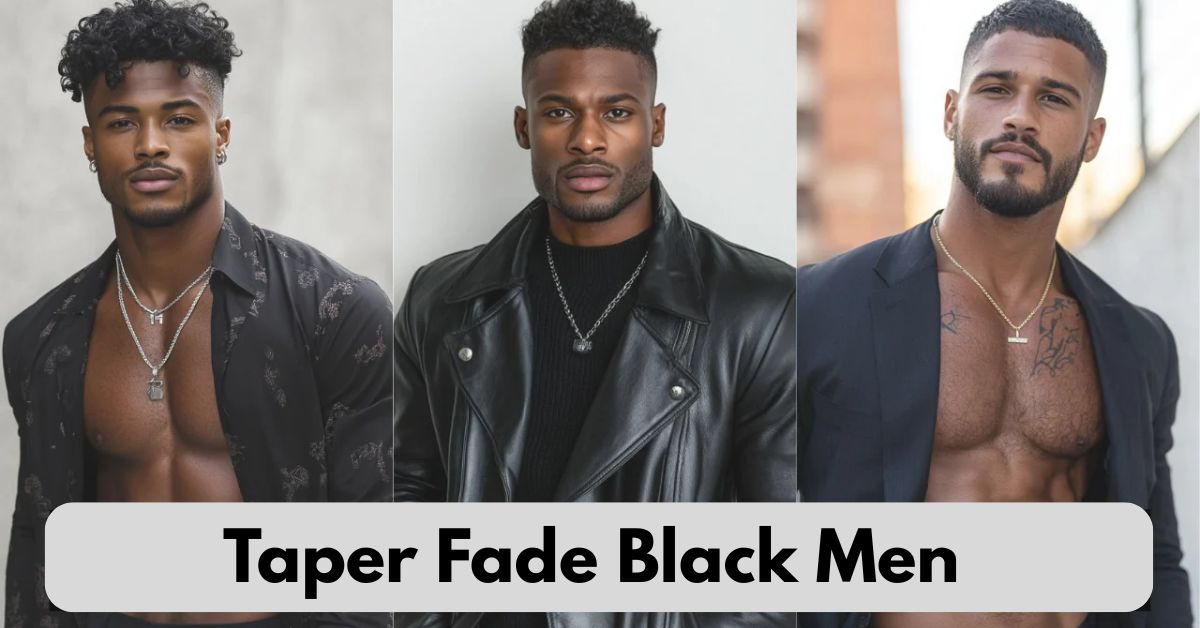
Taper Fade Black Men The Complete Style & Grooming Guide (2026)
If you’ve scrolled through barbershop photos and kept landing on the same kind of cut, there’s a good chance it was a taper fade. Taper fade black men styles have stayed popular for decades because the cut works with almost any hair texture.
It’s not flashy by design, but it’s precise which is exactly why it has stayed in steady rotation while flashier trends come and go. This guide walks through every height variation, how it pairs with afro hair specifically, and what you actually need to say to your barber to get it right the first time.
Whether you’re after a sharp office-ready look or something bolder with waves, twists, or a beard line, the taper fade flexes to fit. We’ll cover high, mid, and low versions, dig into the afro-specific styling questions that most guides skip, and finish with a maintenance timeline so you know exactly when to book your next trim.
What Is a Taper Fade Haircut?
A taper fade haircut for black men is a cut where the hair gradually shortens from longer at the top to very short at the sides and back, blending smoothly into the skin or close to it near the hairline, ears, and neck. Unlike a buzz cut, which keeps length uniform all over, a taper creates a gentle gradient. The result is a cut that looks tidy without ever looking severe there’s no harsh line where the cut “stops,” just a smooth transition.
People often use “taper” and “fade” interchangeably, but there’s a real difference worth understanding before your next barbershop visit. A taper is technically about length reduction along the sides without necessarily reaching the skin, while a fade refers specifically to hair shortened all the way down to skin level. A taper fade combines both: it tapers the length at the crown and gradually fades toward the skin near the perimeter. This means you get the soft blend of a taper with the crisp finish of a fade best of both techniques in a single cut.
This distinction matters more for black male taper haircut styles than for straighter hair types, because curl pattern affects how visible that gradient is. On afro or coily hair, the contrast between longer top hair and faded sides creates more visual definition than it would on straight hair, which is part of why the style reads as so sharp on textured hair specifically.
Taper Fade vs. Regular Fade What’s the Real Difference?
| Feature | Taper | Fade | Taper Fade |
| Sides reach skin? | Not always | Yes | Yes, gradually |
| Blend style | Gradual length drop | Sharp transition zone | Combination of both |
| Best for | Subtle, low-contrast looks | Bold, high-contrast looks | Versatile — works for both |
| Maintenance frequency | Every 4-5 weeks | Every 2-3 weeks | Every 3-4 weeks |
A pure fade tends to need more frequent upkeep because the skin-close sections grow out visibly fast. A taper fade sits in a comfortable middle ground sharp enough to look intentional, forgiving enough that you’re not back in the chair every two weeks.
Why Taper Fades Are a Go-To Choice for Black Hair Textures
Coily and kinky hair textures hold their shape differently than straight hair, and that actually works in favor of the taper fade. Because afro-textured hair has natural volume and lift at the crown, the contrast between the fuller top and the faded sides reads more clearly. This is one reason barbers frequently recommend this cut specifically for fade haircut for afro hair requests the texture does some of the styling work on its own.
There’s also a practical grooming angle. A clean taper fade keeps hair shorter around the ears and neckline, which means less daily upkeep in those zones, while leaving enough length on top for styling versatility twists, curls, a small afro, or a brushed-back look, depending on preference.
How a Taper Blends with Afro, Coily, and Wavy Hair
On tighter coil patterns (often classified 4A-4C), the taper fade tends to look best when the barber leaves slightly more length at the crown, since shorter coily hair can appear to “shrink” more than its actual length suggests. For looser curl or wave patterns, a closer taper still blends cleanly but shows more visible curl definition along the top.
If you’re growing out 360 waves, a taper fade is one of the most common pairings because the faded sides don’t interfere with the wave pattern forming at the crown they simply frame it.
High Taper Fade for Black Men
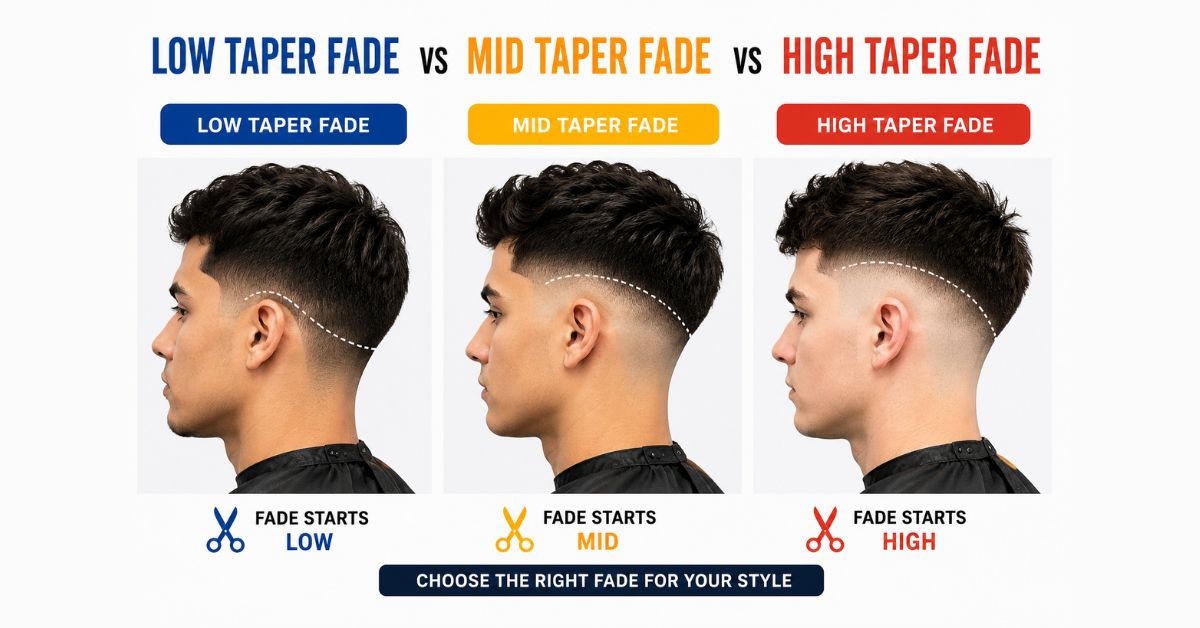
A high taper fade black male style starts the fade higher up the head, typically above the temple, creating more contrast between the top length and the faded sides. This version makes the biggest visual statement of the three height options, since more of the head shows the gradient effect. It’s a favorite for anyone who wants their cut to look sharp from across the room, not just up close.
Because the fade zone is larger, a high taper fade also draws more attention to whatever’s happening on top afro curls, a textured crop, or a design cut all get more visual real estate. This makes it a popular base for modern taper fade looks that pair the cut with a design line or a styled top section.
High Taper Fade with a Curly or Afro Top
Leaving a rounded, voluminous afro section on top while fading high and tight on the sides creates one of the most recognizable afro taper haircut combinations. The shorter sides keep the look manageable day to day, while the curl pattern on top stays free to do its natural thing no flat-ironing or heavy product required.
High Taper Fade with Waves
For men actively brushing out 360 waves, a high taper fade gives the cleanest visual frame. The closely faded sides leave nothing to distract from the wave pattern radiating from the crown, and barbers often recommend this height specifically when waves are the main focus.
High Taper Fade with Twists or Locs
Shorter twists or starter locs paired with a high fade is one of the more requested combinations in barbershops right now. The fade keeps the sides crisp while the twisted sections on top add texture and movement a good middle ground between a fully natural look and a more styled, structured one.
Who Should Choose a High Taper Fade (Face Shape & Hair Density)
High taper fades tend to suit rounder or fuller face shapes well, since the added height and contrast create a slimming, more angular visual effect. They also work well for thicker, denser hair, because there’s enough volume on top to balance the larger faded area. If your hair is finer or thinner, a high taper fade can sometimes emphasize sparseness at the crown a mid or low version often looks more proportional in that case.
Mid Taper Fade for Black Men
The mid taper fade black male version starts the fade around the middle of the side of the head, just above the ear, splitting the difference between subtle and bold. It’s arguably the most universally flattering height because it works across nearly every face shape and hair density without requiring much customization. If you’re unsure which height to ask for, mid is the safest starting point.
This balance is part of why mid taper fades show up so often in professional and corporate settings sharp enough to look deliberate, restrained enough to read as polished rather than edgy. It also blends well with a wide range of facial hair styles, which adds to its everyday versatility.
Mid Taper Fade with a Beard
Pairing a mid taper fade with a well-maintained beard creates a cohesive, grown-man aesthetic that reads as put-together without trying too hard. The key is making sure the beard taper fade transition along the cheek and jawline matches the fade gradient on the sides a mismatched transition is one of the most common ways this combination goes wrong. Ask your barber to blend the sideburn directly into the beard line so there’s no visible seam.
Mid Taper Fade with Line Up
Adding a crisp lineup with taper fade along the front hairline sharpens the entire look, especially for shorter top lengths. The line up creates a clean boundary at the forehead that contrasts nicely with the soft gradient happening on the sides structure up front, softness on the sides.
Mid Taper Fade for Receding Hairlines
If your hairline has started to recede, a mid taper fade can actually work in your favor. Keeping slightly more length at the crown and using a soft, rounded line up (rather than a sharp, geometric one) draws attention away from hairline changes and toward the overall shape of the cut instead. Many barbers will also recommend a slightly lower fade start point in these cases, since it shifts visual weight downward and away from the forehead.
Mid Taper Fade with Box Braids or Twists
Box braids or two-strand twists on top, paired with a mid fade on the sides, is a long-standing combination that holds up well over time because the braided sections don’t require daily restyling. The mid height keeps enough length on the sides that the braids have a natural-looking base to grow from, rather than an abrupt jump from braid to bare skin.
Low Taper Fade for Black Men
A low taper fade black male cut keeps the fade close to the hairline, usually starting just above the ears and around the back of the neck. It’s the most subtle of the three heights, which makes it a strong choice for anyone who wants a clean, professional look without much visual drama. Because so little of the head shows the actual gradient, it reads as understated even though it’s technically just as precise as the higher versions.
This subtlety is exactly why the low taper fade afro combination has become such a popular search and styling choice it lets natural curl texture take center stage on top while keeping the sides quietly tidy. It’s also one of the lower-maintenance options on this list, since the fade zone is small and grows out less noticeably than a high or mid version.
Low Taper Fade with Short Afro
Keeping a short, rounded afro on top while tapering low on the sides creates a classic, timeless silhouette. This combination has remained popular for years because it requires minimal daily styling a light pick or brush in the morning, and you’re set.
Low Taper Fade with Waves
A low taper fade with waves gives a quieter version of the high-fade-with-waves look. The wave pattern is still visible, but the overall cut reads as more conservative, which makes it a frequent request for workplaces with stricter grooming expectations.
Low Taper Fade for a Subtle, Office-Friendly Look
For anyone in a client-facing role or a conservative workplace, a low taper fade is often the safest bet. It satisfies grooming codes that ask for “neat and tidy” without sacrificing personal style, and it’s one of the easier cuts to maintain between trims since the fade line sits low enough that regrowth isn’t immediately obvious.
Low Taper Fade Crop
Combining a low taper fade with a short textured crop on top rather than leaving more length or curl volume creates a tighter, more compact silhouette. It’s a good option for thinner hair density, since the shorter top length doesn’t require much volume to look intentional.
Afro Taper Fade Styles
The afro taper fade deserves its own category because it’s less about fade height and more about how the cut interacts with natural curl texture specifically. This is where terms like afro low taper fade, blowout afro taper fade, and tapered afro haircut come into play they describe a styling approach rather than a strict height measurement, and barbers who specialize in textured hair often build their entire technique around this distinction.
What makes afro taper fades different from a standard taper fade on straighter hair is the way volume behaves. Curl shrinkage means a quarter-inch of coily hair can look like an eighth of an inch once it springs back, so barbers cutting afro fade style looks often work with stretched hair to gauge length accurately before fading the sides. Getting this step right is the difference between a taper fade that looks intentional and one that looks accidentally uneven once the curls settle.
Blowout Afro Taper Fade How It’s Different from a Standard Taper
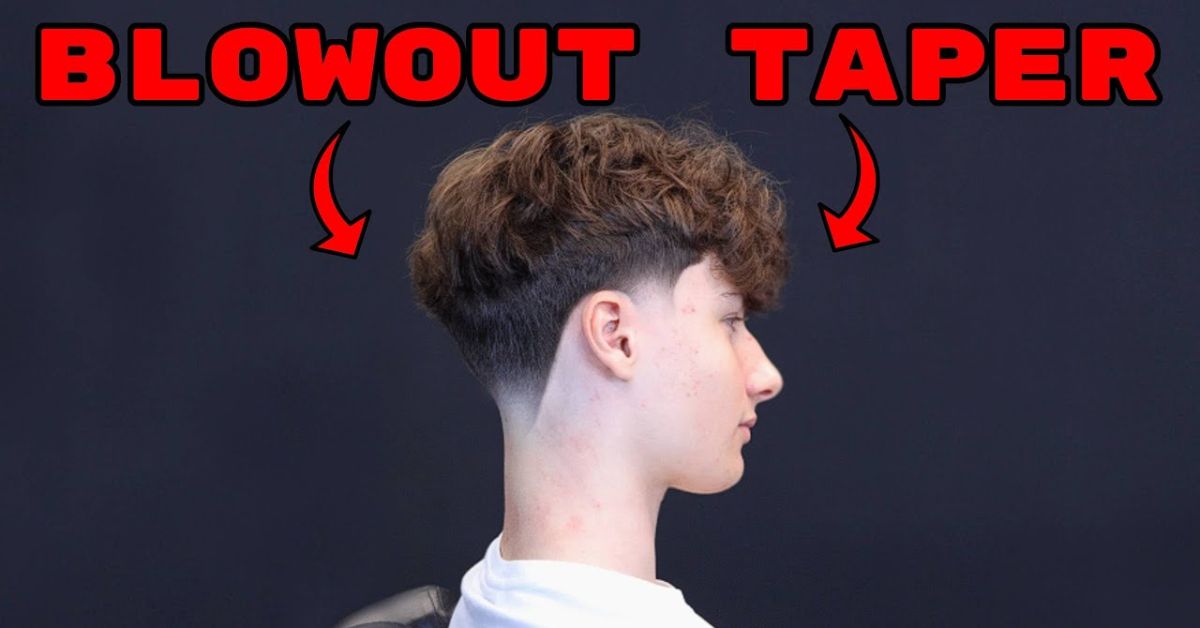
A blowout fade takes the taper fade concept and adds deliberate volume at the crown, almost like a rounded halo effect, before fading sharply into the sides. The “blowout” part refers to the technique of brushing or picking the top section outward and upward to maximize fullness, then fading tightly beneath it for contrast. This creates one of the boldest visual effects in the entire taper fade category high drama up top, precision below.
This style tends to need more frequent touch-ups specifically at the fade line, since any regrowth there immediately competes with the dramatic volume on top. If you go this route, expect to book trims slightly more often than you would for a standard low or mid taper fade.
Afro Taper Fade with Defined Curls
For men who want their natural curl pattern to show clearly rather than blowing it out for volume, a defined-curl afro taper fade keeps the top section shorter and uses curl-defining products to enhance ringlet clarity. This version pairs particularly well with sponge curls taper fade styling, where a sponge or curl brush is used to create more uniform curl definition across the top.
Afro Low Taper Fade for Tighter Coil Patterns
Tighter coil patterns (closer to 4B-4C on standard texture charts) often look best with a low taper fade specifically, because the smaller fade zone doesn’t compete visually with the dense volume naturally present at the crown. A high fade on very tight coils can sometimes look disproportionate, since there’s a sharper jump from “very full” to “very short” with less middle ground to ease the transition.
Maintaining Volume on an Afro Taper Fade Between Trims
Between barbershop visits, a light leave-in moisturizer and a wide-tooth pick (rather than a fine comb) help maintain volume without disrupting curl pattern. Sleeping with a satin or silk cap also helps preserve shape overnight, since cotton pillowcases tend to flatten curls and pull moisture out of the hair shaft.
25+ Taper Fade Black Men Styles
There’s no single “correct” way to wear a taper fade taper fade black men styles serve as a flexible base that pairs with dozens of finishing touches. Below are the most common categories barbers see requested, grouped by what’s happening on top or alongside the fade itself.
Taper Fade with Beard
A sharp taper fade paired with a full or medium beard is one of the most requested combinations for a polished, mature look. The key detail barbers focus on is blending the sideburn into the beard seamlessly, so the fade and the beard read as one connected shape rather than two separate grooming choices.
Taper Fade with Design or Line Work
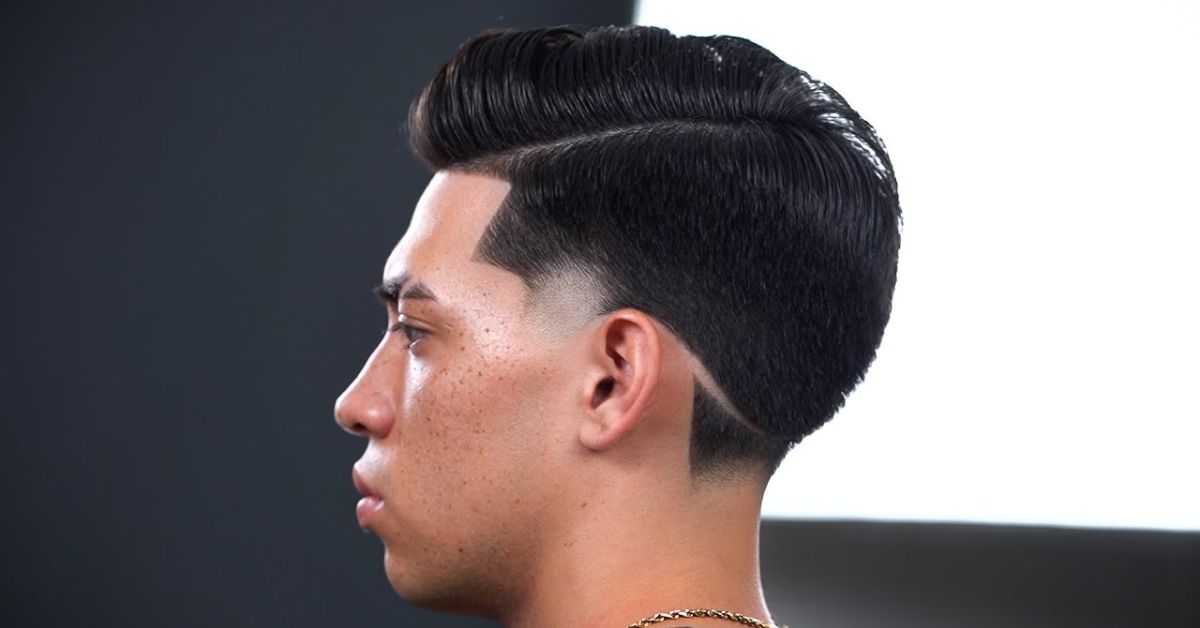
Adding shaved line designs anything from a single part line to more elaborate geometric patterns gives a fresh taper fade extra personality. These designs work best on shorter top lengths where the lines stay visible, and they’re typically touched up every other visit since the design fades faster than the rest of the cut.
Taper Fade Mohawk / Faux Hawk
Combining a taper fade with a mohawk or faux hawk silhouette creates one of the bolder looks on this list. The sides taper down dramatically while a strip of longer hair runs along the center, often styled upward or brushed back. This version photographs particularly well and tends to be a favorite for special occasions rather than daily wear.
Taper Fade with Dreadlocks or Braids
For men growing locs or wearing braided styles, a taper fade on the sides keeps the overall look tidy while the braided or loc’d sections handle the styling on top. This is one of the lowest day-to-day maintenance combinations on the list, since braids and locs don’t need restyling between barber visits.
Taper Fade for Bald or Thinning Crown
If thinning is happening at the crown rather than the hairline, a taper fade that gradually shortens toward the top rather than maintaining a sharp length contrast can minimize the visual difference between thinning and full areas. Some men in this situation opt for a slightly higher fade specifically to reduce the appearance of a gap in density.
Taper Fade Black Men How to Choose the Right Height
Picking between high, mid, and low isn’t just a style preference it’s a decision that should factor in face shape, hair density, and how much time you realistically want to spend on upkeep. Getting this match right is exactly what makes taper fade black men styles wear well day after day, instead of fighting your natural features.
Matching Taper Height to Face Shape
Rounder faces generally benefit from high taper fades, since the added height and contrast create visual length and a more angular impression. Longer or oval face shapes tend to suit mid or low tapers better, since they don’t need the extra height to balance proportions. Square jawlines pair well with almost any height, though many men with strong jaw definition lean toward mid tapers to avoid over-emphasizing angularity.
Matching Taper Fade to Hair Density and Curl Pattern
Thicker, denser hair can support a high taper fade without looking unbalanced, since there’s enough volume on top to offset the larger faded area. Finer or thinning hair often looks more proportional with a low or mid fade, where the contrast is gentler and less likely to draw attention to sparse areas.
Matching Taper Fade to Lifestyle and Maintenance Time
| Lifestyle Factor | Best Taper Fade Height | Why |
| Busy schedule, infrequent barber visits | Low taper fade | Smallest fade zone, slowest visible regrowth |
| Active social or professional visibility | Mid taper fade | Balanced look, moderate upkeep |
| Enjoys frequent style changes | High taper fade | More dramatic base for design work and styling |
Taper Fade with Facial Hair: What Pairs Best
A temple taper fade where the fade is concentrated specifically around the temple area near the hairline pairs especially well with thicker beards, since it creates a clean separation between hair and facial hair without requiring a full sideburn fade. Lighter or shorter facial hair, on the other hand, often looks more cohesive with a fade that extends further down toward the jaw, connecting hair and beard into one continuous shape.
How to Ask Your Barber for a Taper Fade
Walking into a barbershop with the right vocabulary makes a noticeable difference in how closely the final result matches what you actually pictured. Barbers work with specific terminology, and being able to speak that language even loosely helps avoid the common disappointment of leaving the chair with something close, but not quite right.
Guard Numbers and Blending Zones to Mention
Clipper guards are numbered by length, typically ranging from a 0 (skin-close) up to an 8 (around an inch). For a taper fade, you’ll usually specify a starting guard for the top section (commonly a 3-5 depending on desired length) and let the barber know where you want the fade to begin blending toward skin low (near the ear), mid (above the ear), or high (toward the temple). Saying something like “a 4 on top, fading to skin starting mid-height” gives a barber a clear, specific target.
Bringing Reference Photos: What to Point Out
Photos help enormously, but pointing out specific details matters more than just showing the image. Mention the fade height, how much length is left on top, and whether the photo’s hair texture matches your own a style that looks one way on straight hair can look noticeably different on tightly coiled hair, even with the exact same guard numbers.
Finding a Barber Experienced with Black Hair Textures
Not every barber has equal experience cutting and fading textured hair, and it shows in the final result. Ask around for barber taper fade styles specifically suited to coily or kinky textures, check a barber’s portfolio for examples of similar hair types, and don’t hesitate to ask directly whether they regularly work with afro-textured hair before booking. A barber who fades textured hair daily will understand curl shrinkage and blending in a way that translates to a noticeably cleaner result.
Taper Fade Maintenance and Regrowth Timeline
A taper fade looks sharpest in the first one to two weeks after a cut, but understanding how it grows out helps you plan your next appointment before the look starts to lose its shape. This is one area where taper fade black men styles genuinely outperform skin fades because the blend happens gradually rather than ending in a hard line, regrowth tends to be more forgiving. Still, the cut has a clear lifespan worth planning around.
Week-by-Week: How a Taper Fade Grows Out
In the first week, the fade line stays crisp and the contrast between top and sides remains sharp. By week two, you’ll start to notice slight thickening in the faded zone, though it’s usually still presentable. Week three is typically when the blend starts softening noticeably the gradient becomes less defined, and many men book a touch-up around this point. By week four, most taper fades have lost enough definition that a fresh cut is needed to restore the original sharpness, especially for high or mid versions where more of the head is affected by regrowth.
Recommended Trim Frequency
Most barbers recommend returning every three to four weeks for a standard taper fade, though high fades with more dramatic contrast may need attention closer to the three-week mark. Low taper fades tend to stretch comfortably to four or even five weeks before the blend becomes noticeably uneven, simply because there’s less faded surface area to grow out.
Products That Keep the Blend Sharp (Creams, Pomades, Edge Control)
A light pomade or styling cream helps maintain shape on top between cuts without weighing curls down. For the faded sides specifically, a small amount of edge control or light hold gel applied along the hairline and temple keeps stray regrowth hairs from standing out as the fade softens. Avoid heavy, greasy products on textured hair, since they can make curls clump unnaturally rather than holding their defined shape.
At-Home Touch-Up Tips Between Barber Visits
If you own clippers, lightly going over the neckline and sideburns between full barbershop visits can extend the life of a clean-looking fade by a week or more. Stick to the same or a slightly higher guard than your barber used to avoid accidentally creating a visible line where your touch-up meets the original fade.
FAQ’s
How long does a taper fade last?
A taper fade typically holds its sharp appearance for two to three weeks, with the overall shape remaining wearable for up to four weeks before a fresh cut becomes necessary. Low taper fades tend to last slightly longer than high taper fades simply because less surface area is affected by regrowth.
Does a taper fade work for receding hairlines or thinning hair?
Yes a taper fade can actually help disguise both. For receding hairlines, a softer, rounded line up paired with a mid or low fade shifts visual focus away from the forehead. For thinning at the crown, a barber can adjust length gradually rather than creating sharp contrast, which reduces the visibility of density differences.
Is a taper fade lower maintenance than a skin fade?
Generally, yes. Because a taper fade blends gradually rather than reaching bare skin at a hard line, regrowth is less immediately noticeable. A skin fade typically needs trimming every two to three weeks to stay sharp, while a taper fade can often stretch to three or four weeks.
Can you get a taper fade with long hair on top?
Absolutely. Taper fades work with virtually any top length, from a short crop to a fuller afro, twists, or even shoulder-length locs. The fade simply provides a clean, tapered frame for whatever length and texture you’re wearing on top.
How much does a taper fade typically cost?
Pricing varies significantly by location and barbershop tier, but a standard taper fade generally falls within the same price range as a typical men’s haircut, often with a modest upcharge if additional services like a beard trim or line up are added. It’s worth asking your barbershop directly, since pricing structures differ widely.
What’s the difference between a burst fade and a taper fade?
A burst fade tapers in a rounded shape specifically around the ear, often used with mohawks or longer top styles, while a standard taper fade extends more uniformly along the entire side and back of the head. A burst taper fade afro combination blends both techniques, using the burst shape around the ear while tapering more conventionally elsewhere.
Final Thoughts
A taper fade earns its long-running popularity because it adapts to nearly any face shape, hair texture, and lifestyle without losing its core identity clean sides, deliberate length on top, and a blend that never looks accidental. Whether you choose a high fade for maximum contrast, a low fade for understated polish, or lean into an afro-specific styling approach with a blowout or defined-curl finish, taper fade black men styles all share the same foundation: precision that works with your natural texture rather than against it.
The next step is simple. Decide which height and texture combination fits your daily routine and face shape best, save a few reference photos that match your actual hair type, and book a barber with clear experience fading textured hair. Bring the vocabulary from this guide with you, and you’ll walk out with a cut that holds its shape exactly as long as it should.