Taper Fade Curly Hair Every Style, Type & How to Pull It Off
A taper fade curly hair combination is one of the most versatile and stylish choices in modern men’s grooming. It works with nearly every curl pattern, every face shape, and every lifestyle whether you want something clean and professional or bold and statement-making.
The contrast between a sharp fade and a full, textured top is what makes this cut so visually striking. And yet, so many people walk into the barbershop without a clear idea of what to ask for or how to make the most of their natural curl pattern.
This guide covers everything you need to know from understanding the difference between a taper and a fade, to choosing the right fade height for your curls, to maintaining your cut between visits. Whether you’re considering your first curly taper fade haircut or looking to refine a style you already wear, this is the most complete resource you’ll find.
What Exactly Is a Taper Fade for Curly Hair?
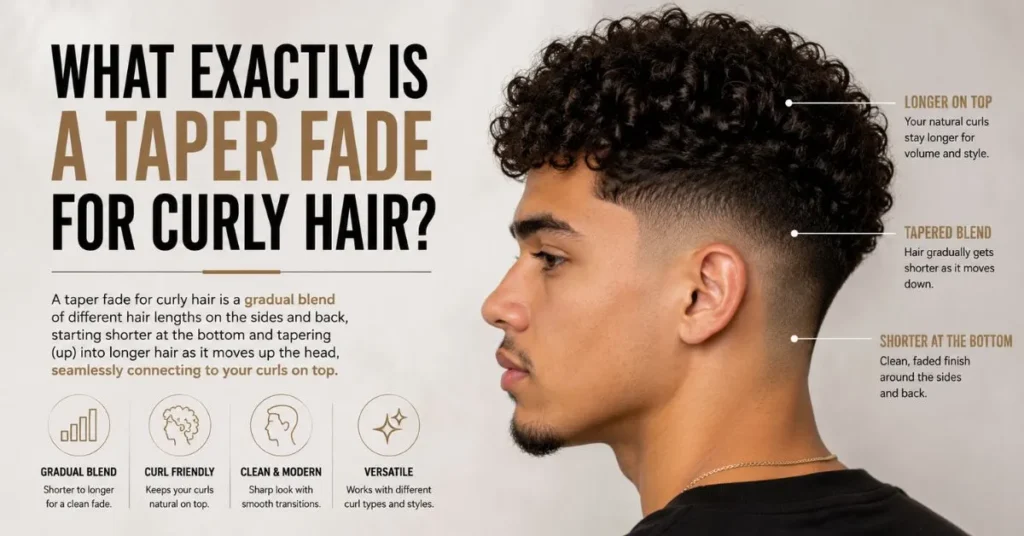
A taper fade is a haircut technique where the hair gradually shortens from the top of the head down toward the hairline, temples, and neckline. The key word is gradually the transition is smooth and blended, not abrupt. For people with curly hair, this technique creates a dramatic visual contrast: the longer, textured curls on top sit against a clean, close-cut fade on the sides and back.
The curly taper fade has become one of the defining haircuts of the past decade across global barbershops. It flatters a wide range of curl patterns from loose waves to tight coils and works for both short and longer hair on top.
The reason it works so well is structural. Curly hair naturally adds volume and height, so the tight fade on the sides prevents the overall shape from becoming too wide or unbalanced. The fade acts as a frame, directing attention upward and emphasizing the curl pattern.
Taper vs. Fade vs. Taper Fade What’s the Real Difference?
These three terms get used interchangeably, but they describe different things. Understanding the distinction helps you communicate better with your barber and get exactly the cut you want.
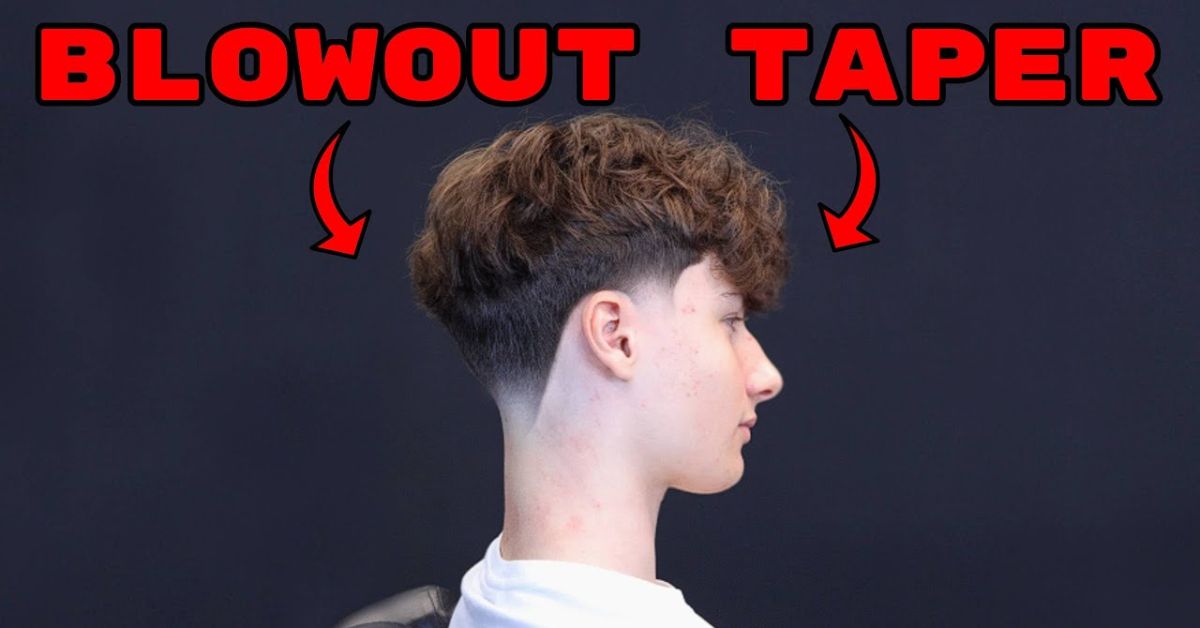
A taper means the hair gets shorter as it moves toward the hairline, but it doesn’t necessarily go down to skin level. The hair still has some length even at the very bottom. A fade, on the other hand, blends the hair all the way down to the skin, often using multiple clipper guards to create a seamless gradient.
A taper fade combines both it follows the gradual shortening of a taper but blends all the way to the skin like a fade. The result is a cleaner, more defined look than a standard taper alone. For curly hairstyles for men, the taper fade version is almost always the more polished and popular choice.
Why Curly Hair and Taper Fades Work So Well Together
Curly hair has natural volume and texture that straight hair simply doesn’t. This is a huge advantage with a fade cut because the top section of your hair does its own thing it expands, spirals, and creates shape naturally, with minimal styling effort. The fade on the sides keeps that volume controlled and intentional rather than looking overgrown or unstructured.
There’s also the contrast factor. The visual shift from close-cropped skin at the temples to full, defined curls on top creates a strong, modern silhouette. It’s a look that works equally well in a professional setting and a casual one, which is part of why the taper fade for curly hair men has stayed consistently popular across trends and seasons.
Every Type of Taper Fade for Curly Hair Explained
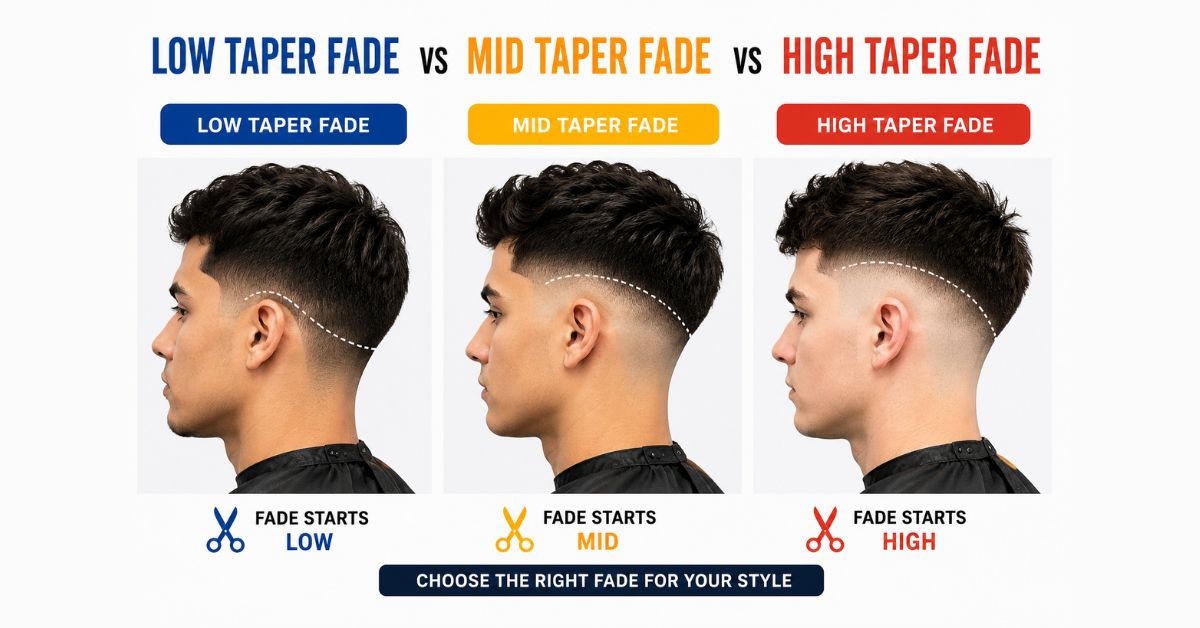
Not all taper fades sit at the same position on the head, and where the fade starts makes a significant difference to the overall look. The three main categories are low, mid, and high referring to where on the sides the fade begins. Each creates a different visual effect and suits different preferences when it comes to boldness, maintenance, and style.
Low Taper Fade with Curly Hair Clean, Subtle, Versatile
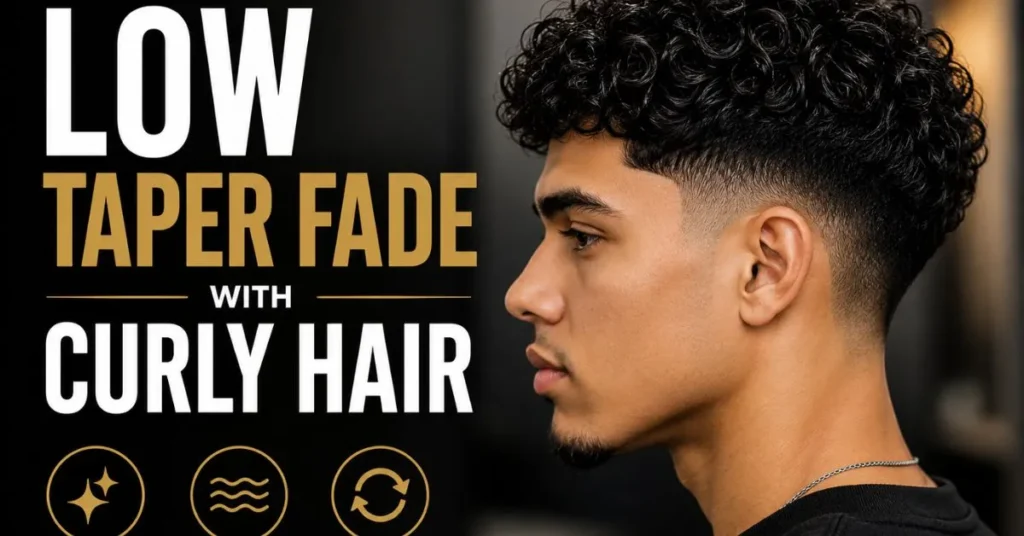
The low taper fade curly hair style is the most conservative option and, for many people, the most wearable. The fade begins just above the ear and the hairline, keeping most of the hair length on the sides intact. The transition to skin happens close to the neckline and temples rather than higher up the head.
This is the ideal choice if you want a curly hair low taper fade that looks polished without being too aggressive. It suits professional environments, it grows out gracefully, and it’s appropriate for virtually every age group and setting.
The curly low taper fade also works especially well for men with rounder face shapes because it doesn’t add additional width at the sides the subtle fade keeps the silhouette balanced. If this is your first time getting a taper fade, starting low is a smart move.
Mid Taper Fade with Curly Hair The Balanced Choice
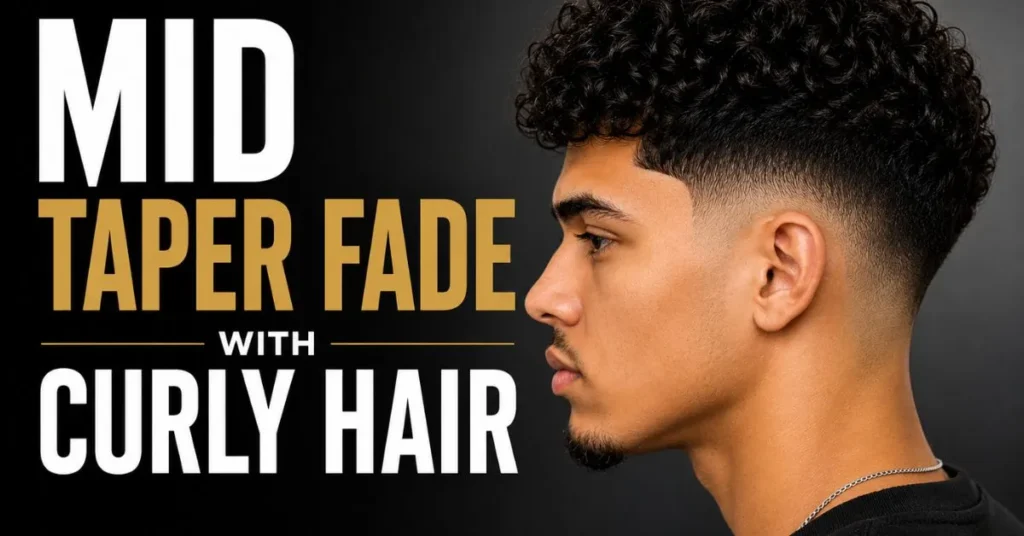
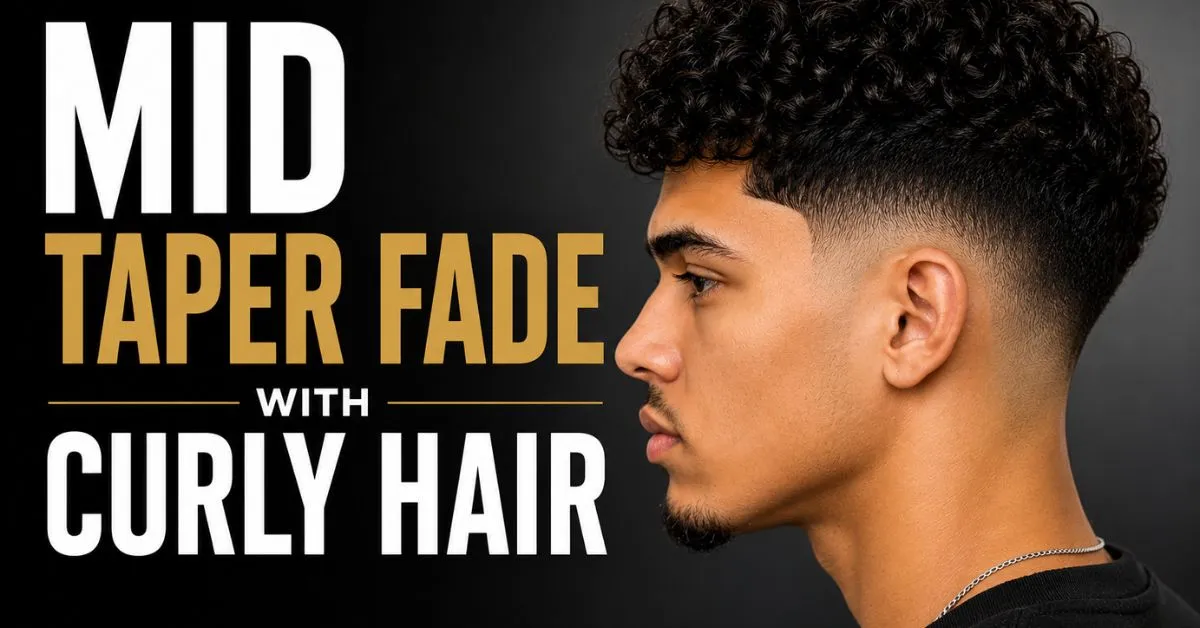
The mid taper fade curly hair sits roughly at the level of the temples and begins blending there, creating more visible contrast than a low fade without going full high-fade territory. This is arguably the most popular option globally because it strikes a balance it’s modern and styled without being extreme.
With curly hair, the mid fade creates a clear separation between the fade zone and the curly top, which makes the curls look more intentional and defined.
It also works well with a range of curl lengths on top, from short textured crops to longer, fuller styles. Mid taper fade curly hair suits oval and oblong face shapes particularly well because the moderate fade height doesn’t over-elongate or over-widen the face. For most men, this is the starting recommendation if you’re unsure which fade height to choose.
High Taper Fade with Curly Hair Bold Contrast, Maximum Volume
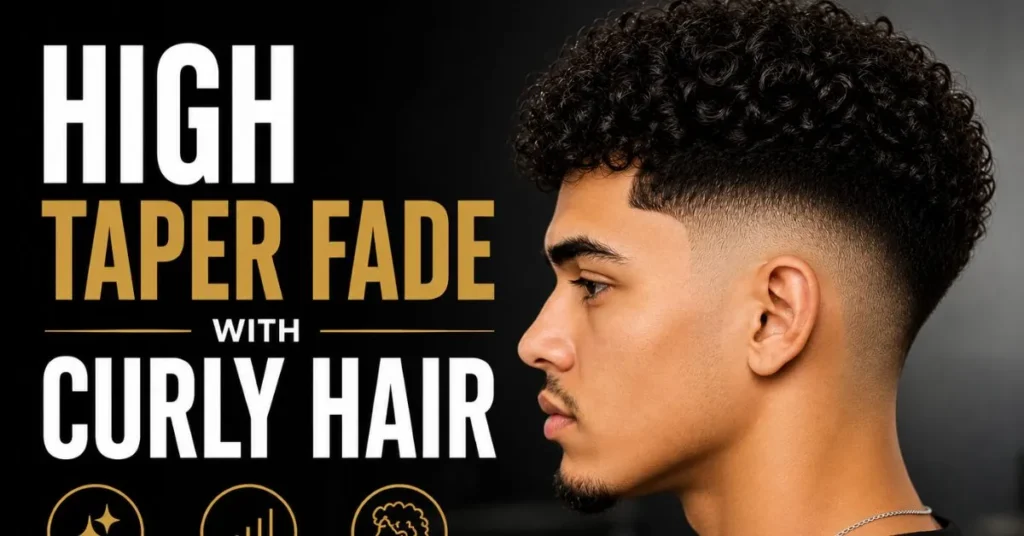
The high taper fade curly hair begins blending above the temples, much higher up on the sides and back of the head. This creates the most dramatic contrast of all three options the curls on top appear especially voluminous because they’re sitting against an almost entirely skin-faded side.
This style is bold, confident, and high-impact. It works best for men who are comfortable with a striking look and who are willing to maintain the cut more frequently, since the high fade grows out quickly and becomes noticeable within two to three weeks. T
he curly top fade variation where the fade reaches nearly to the top of the head is a direct evolution of this style and is popular in contemporary men’s curly hair trends.
Skin Taper Fade with Curly Hair Sharpest Definition
A skin fade, sometimes called a bald fade, takes the transition all the way to bare skin with no guard. The blend is ultra-precise and creates the sharpest possible contrast between the close-cropped sides and the curly top. This is the most technically demanding version to execute, which means you need a barber with real experience in barber fade for curly hair.
The skin fade works best with well-defined curl patterns ringlets and coils show up especially well against a clean-shaved side. It’s also a popular choice as a fresh fade haircut for special occasions or when you want the cut to look its absolute best for a specific event. The tradeoff is maintenance: a skin fade needs a touch-up every one to two weeks to stay sharp.
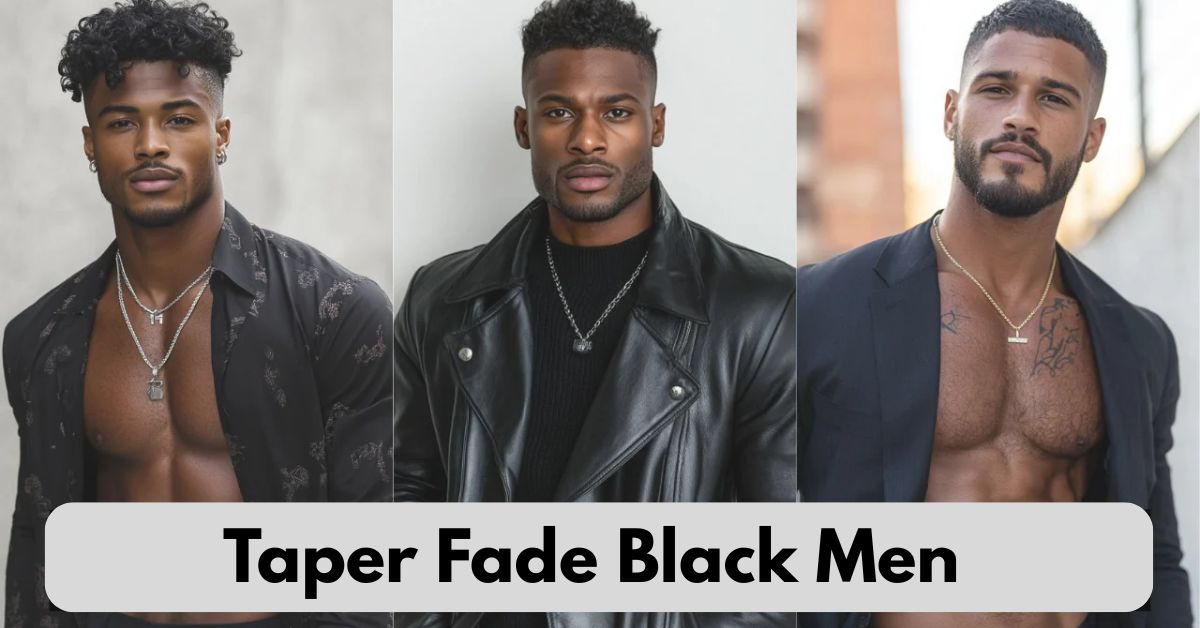
Low Taper Fade for Black Curly Hair Texture-Specific Guide
Low taper fade curly hair black men’s styles deserve specific attention because coily hair types (3C–4C on the curl pattern scale) behave differently under the clippers than looser curl patterns do. Tight coils have more shrinkage, meaning the hair appears shorter when dry than it actually is.
This affects how a barber needs to blend the fade a barber who isn’t experienced with Black men’s hairstyles and tighter textures may not account for shrinkage properly, leaving uneven blending.
For 4A–4C curl patterns, the low taper fade is often the most flattering starting point because it allows the natural shape and density of coily hair to shine on top without overexposing the sides.
The contrast between tight, defined coils and a clean low fade is visually powerful and requires minimal product to look intentional. Always seek out a barber who has demonstrated experience with your specific hair texture look at their portfolio before booking.
Choosing the Right Taper Fade Based on Your Curl Type
Your curl pattern the natural shape and tightness of your curls should influence which type of taper fade curly hair you choose. Curl types range from loose waves (Type 2) through to tight coils (Type 4), and each category responds differently to a fade cut in terms of how it looks, how it behaves with product, and how much volume it generates on top.
Loose Waves and Ringlets (Type 2–3A) Best Fade Heights
Wavy hair and loose ringlets tend to be lighter and more fluid in movement. They don’t create as much vertical volume as tighter curls, which means a high taper fade can sometimes make the top look flat if there isn’t enough length to build volume.
For Type 2 and 3A curls, a low or mid taper fade is usually the better fit. It keeps enough weight on the sides to balance the lighter texture on top. With these curl types, styling with a sea salt spray or light mousse adds definition and helps the waves hold their shape against the fade.
Defined Coils (Type 3B–3C) How to Control Volume with a Fade
Type 3B and 3C curls are bouncy, defined, and naturally voluminous. They’re probably the most compatible curl types with every level of taper fade because they produce enough volume and shape to justify both low and high fade heights. The coils themselves create a strong visual presence on top, so the contrast with the fade is always clean and intentional.
Hair density matters here too. If you have thick, dense 3B curls, a high fade will create a mushroom-like silhouette if the top isn’t shaped properly. Ask your barber to remove some internal bulk from the top section using scissor-over-comb or razor techniques this controls volume without reducing the length or curl definition. The result is a textured curly haircut that looks shapely rather than overgrown.
Tight Coils and Kinks (Type 4A–4C) Fade Blending Tips
Type 4 natural curls and kinks have the most shrinkage and density of any curl type. The key challenge with a taper fade on 4A–4C hair is making sure the blend is seamless despite the coil’s tendency to create a defined boundary at the fade line.
An experienced barber will use a combination of clipper guards and a razor to soften that line and ensure the transition looks smooth even as the hair grows out.
With Type 4 hair, product choice is critical for showing off the style properly. A curl cream or moisturizing gel applied to damp hair helps define and elongate the coils on top, making the contrast with the fade even more striking. Hair moisture is non-negotiable dry, frizzy coils lose definition quickly and make the overall cut look less precise than it actually is.
Taper Fade Styles by Face Shape Which Cut Suits You?
Face shape is one of the most overlooked factors when choosing a curly taper fade haircut. The fade height, in particular, has a real impact on how elongated or wide your face appears. Getting this right means the cut enhances your natural features rather than working against them.
Oval Face Any Fade Height Works (Here’s the Best Option)
An oval face is symmetrical and balanced, which means it suits most fade heights without adjustment. That said, a mid taper fade tends to look the most refined on oval faces because it neither adds nor subtracts much from the natural proportions. You have the most freedom to experiment with curl length on top from short crops to longer, fuller styles.
Round Face Why a High Taper Fade Adds Length
A round face has roughly equal width and length, with soft angles. A high taper fade creates visual height by keeping volume concentrated at the very top of the head, which elongates the face. Keeping the curls longer on top especially if they spring upward reinforces this effect. Avoid a low fade with a short, wide curl shape on top, as this emphasizes the width of the face rather than adding length.
Square Face Low Fade Softens a Strong Jawline
A square face has strong, angular lines, particularly along the jaw. A low taper fade works well here because it keeps some hair at the sides, softening the overall silhouette. Pairing this with curls that have a bit of movement and looseness rather than ultra-defined, stiff coils creates a look that balances the angular jaw without competing with it.
Oblong or Diamond Face Mid Fade Keeps Proportions Balanced
An oblong or diamond face is longer than it is wide. A mid fade is the most balanced option here it avoids the additional height that a high fade would create, while still offering a clean, modern look. Keeping curl volume moderate on top rather than building excessive height helps the face appear more proportionate.
12 Best Taper Fade Curly Hair Styles Right Now
The curly taper fade is far from a one-size-fits-all cut. There are dozens of variations, and the right one depends on your curl type, preferred length, and lifestyle. Below are twelve of the most popular curly taper fade ideas in 2026, each with practical details to help you decide if it’s right for you.
Curly Afro with Low Taper Fade
A full, rounded afro on top with a clean low fade below. Works best with 4A–4C curl types. Maintenance level: moderate. Best for oval and round face shapes.
Short Curly Crop with Mid Taper Fade
A tight, close-cut curl pattern on top typically 1–2 inches with a mid fade blending into the sides. One of the most low-maintenance short curly hair fade options. Suits all face shapes and works well in professional environments.
Defined Ringlets with High Skin Taper
Long, defined ringlets (3B–3C) paired with a skin fade that starts high on the temples. Bold and fashion-forward. Requires frequent touch-ups to keep the skin fade sharp. Best suited to oval face shapes.
Curly Fringe with Low Taper Fade
Curls pushed forward over the forehead to create a fringe, with a low taper on the sides and back. A modern curly haircut with a European influence. Works well with Type 3A–3B curls.
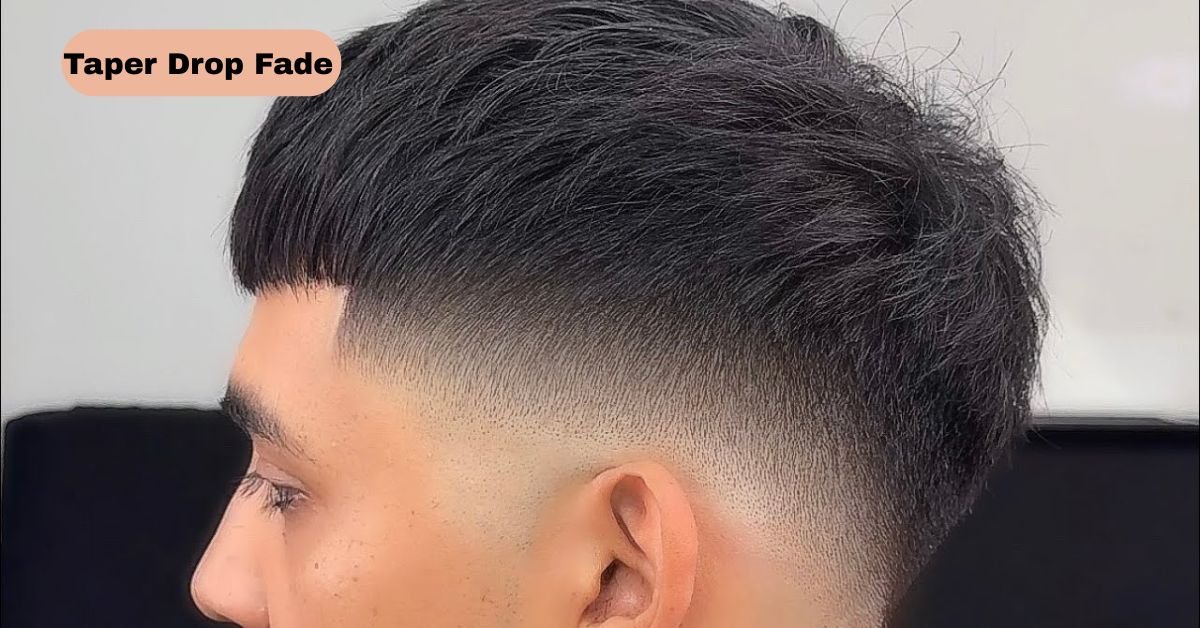
Textured Curls with Drop Taper Fade
A drop fade follows the curve of the head behind the ear rather than going straight around. Combined with textured curls on top, it creates a rounded, natural-looking silhouette that’s especially flattering on round and oval faces.
Long Top Curly Hair with Low Taper Fade
A long curly hair fade where the top section is kept at 3–5 inches or longer, allowing the curls to fall naturally. The low fade keeps the sides clean without taking too much length. Works with loose waves through to tighter ringlets. Requires the most product and styling time of any style on this list.
Curly Pompadour with Mid Taper Fade
Curls swept back and upward from the forehead, creating height and volume reminiscent of a classic pompadour shape. A stylish curly haircut that works especially well for special occasions or more formal settings.
Burst Fade with Curly Hair
The fade radiates outward from behind the ear in a semicircular shape, creating a halo-like effect. Pairs naturally with curly hair on top because the circular fade echoes the shape of the curls themselves.
Curly Edgar with Low Taper
A blunt, horizontal fringe paired with a low taper fade. A contemporary cut popular in urban barbershop culture. Works best with 3A–3C curls that can hold a clean horizontal line across the forehead.
Curly Mid Fade with Beard
The curly taper fade with beard is a complete, groomed look. The mid fade on the sides connects cleanly into a shaped beard, creating a continuous line from the side of the head to the jaw. Choose a beard length that complements your curl volume thicker curls on top work better with a shorter, tighter beard.
Natural Curly High Fade
Letting the natural curls grow freely on top while maintaining a clean high fade below. Minimal product, minimal intervention just curl cream and air-drying. A celebration of natural texture.
Curly Textured Crop with Skin Fade
A short, textured crop usually achieved by point-cutting to remove bulk while preserving curl definition paired with a skin fade. One of the most popular trendy curly hairstyles for men in barbershops globally right now.
How to Tell Your Barber Exactly What You Want
Even the best barber in the world can’t deliver the cut you want if you can’t communicate it clearly. This is where most people get it wrong. Vague instructions like “just clean it up” or “something with a fade” leave too much to interpretation. Specific language gets specific results.
The Exact Words to Use When Asking for a Taper Fade on Curly Hair
When you sit in the chair, structure your request in three parts: fade height, top length, and curl handling. For example: “I’d like a mid taper fade, starting around the temples, blended down to skin. On top, keep about two and a half inches of length and use scissors to reduce the bulk without losing the curl shape.” That single instruction gives your barber everything they need position, technique, length, and texture goal. If you want a curly taper fade haircut with a beard line, add: “Clean up the beard line where it meets the fade.”
What to Bring to the Appointment
A reference photo is the single most effective communication tool you have. Look for images that show both the fade height and the curl length on top not just one or the other. Ideally, find someone with a similar curl type to yours, because a style that works on loose waves may look completely different on tight coils. Save two or three images and show the barber what you like about each one specifically.
Questions to Ask Your Barber Before the Cut Starts
Before a single clipper touches your head, ask: “Have you worked with this curl type before?” Look at their previous work if it’s available online. Ask how they handle the transition at the natural growth point behind the ear, which is one of the trickiest areas on curly hair. A barber who understands natural curls will give you a confident, specific answer. One who hesitates or gives vague reassurances is worth being cautious about.
How to Style a Taper Fade with Curly Hair at Home
Getting the haircut right is only half the equation. Knowing how to style your taper fade curly hair at home is what keeps the cut looking intentional between barber visits rather than progressively more disheveled. The good news: curly hair with a fade is one of the most forgiving cuts to maintain day-to-day because the natural texture does a lot of the visual work for you.
Start with Wet or Damp Hair (Never Dry)
Curly hair is far more responsive to product when it’s wet. Applying product to dry curls often leads to inconsistent coverage and product buildup rather than real definition.
After washing, gently squeeze out excess water with a microfiber towel don’t rub, which disrupts the curl pattern and causes frizz. Work with hair that’s damp rather than dripping.
Apply Curl-Enhancing Product from Root to Tip
The best products for a curly fade haircut are curl creams, defining gels, or lightweight pomades. Apply from the root outward to ensure every part of the curl is coated. Use your fingers to scrunch the product in, encouraging the natural curl shape.
For Type 3 curls, a curl cream with medium hold gives the best balance of definition and movement. For Type 4 coils, a thicker gel or butter cream works better to seal in hair moisture and define the pattern.
Diffuse or Air-Dry Without Disturbing the Curl Pattern
If you’re air-drying, simply let the hair dry without touching it. Touching curls while they’re drying breaks up the curl pattern and creates frizz. If you’re using a diffuser, set your dryer to medium heat and low airflow, and cup sections of hair in the diffuser bowl rather than moving it around the head. This approach respects the natural curl formation and produces defined, bouncy results.
Shape the Top, Leave the Fade Crisp
Once the hair is dry, use your fingers (not a brush or comb) to shape the top section. Separate any curls that have clumped together too thickly and adjust the overall volume. The fade section requires nothing keep it clean and don’t apply product to the faded sides, as this can make the skin look greasy and defeat the clean aesthetic of the cut.
Maintaining a Taper Fade with Curly Hair Between Barber Visits
One of the most practical questions anyone asks about this style is how long it lasts and how to keep it looking sharp as it grows out. The honest answer depends on the fade height you chose.
How Long Does a Taper Fade Last on Curly Hair?
A skin or high taper fade starts to look noticeably grown-out within two to three weeks. The contrast between the faded skin and the growing-in stubble becomes visible quickly, which is the main visual indicator that a touch-up is needed.
A mid taper fade stays looking intentional for three to four weeks before the blend starts to lose definition. A low taper fade is the most forgiving you can reasonably go four to six weeks between visits because the lower fade position is less exposed and grows out more gradually.
How Often Should You Get a Taper Fade Touched Up?
As a general guide: every two weeks for a skin or high fade, every three to four weeks for a mid fade, and every four to six weeks for a low fade. If budget or time is a concern, choosing a low fade is a practical decision it saves you both money and scheduling time over the course of a year without sacrificing style.
Daily Hydration Routine for Curly Hair with a Fade
Hair maintenance for curly hair comes down to one core principle: keep the curls moisturized. Dry curls lose definition, frizz out, and make even a freshly cut taper fade look unkempt. On non-wash days, a light spritz of water mixed with a small amount of leave-in conditioner refreshes the curl pattern without requiring a full wash. Look for leave-in conditioners that contain ingredients like glycerin, shea butter, or aloe vera these draw and lock moisture into the hair shaft.
How to Protect Your Curls and Fade While Sleeping
Friction from a cotton pillowcase disrupts the curl pattern overnight and causes frizz. Switching to a satin or silk pillowcase is one of the easiest and most effective improvements you can make to your morning hair routine.
Alternatively, a satin-lined sleep cap or loose wrap protects the curls while you sleep. A few seconds of preparation before bed saves significant styling time in the morning.
Refreshing Curls on Non-Wash Days
Mix equal parts water and leave-in conditioner in a small spray bottle and mist your hair lightly. Then scrunch gently to reactivate the curl pattern and re-apply a small amount of curl cream if needed.
This technique sometimes called the “refresh method” restores definition and reduces frizz without the need for a full wash-and-restyle. For curly hair grooming tips, this is one of the highest-impact habits you can build.
Best Products for Taper Fade Curly Hair (By Hold and Finish)
Choosing the right products for your curly taper fade isn’t about brand loyalty it’s about understanding what each product type does and matching it to your curl pattern and desired finish. Here’s a practical breakdown by function.
For Curl Definition Creams and Gels
Curl cream is the go-to product for most curl types because it provides definition without stiffness, leaving the curls touchable and natural-looking. It works best for Type 2–3B curls. For tighter curl patterns (3C–4C), a defining gel or a butter-based cream provides stronger hold and better moisture retention. Look for products free of sulfates and silicones, which can strip hair moisture over time and cause buildup.
For Light Hold and Natural Texture Sea Salt Sprays and Mousses
Sea salt spray adds texture, enhances natural wave patterns, and gives a slightly matte, beachy finish. It’s best suited to Type 2 and loose 3A curls applying it to tighter curl types can cause dryness rather than definition. A lightweight mousse is a better option for 3A–3B curls when you want more volume and lift without the weight of a cream.
For Shine and Frizz Control Oils and Serums
A few drops of argan oil or jojoba oil applied to the ends of dry curls adds shine, reduces frizz, and gives a polished finish to the overall curly hair transformation. Use these sparingly a small amount goes a long way, and over-application weighs the curls down and makes the fade look greasy.
For Wash Day Sulfate-Free Shampoos and Deep Conditioners
Curly hair is naturally drier than straight hair because the twists and bends of the curl shaft make it harder for natural scalp oils to travel down the hair strand.
Washing with a sulfate-free shampoo prevents stripping those natural oils, and following with a deep conditioner once a week or every two weeks maintains hair moisture levels that keep curls defined and frizz-free. Don’t wash more than two to three times per week over-washing removes essential oils and leads to dryness.
| Product Type | Best For | Finish |
| Curl Cream | Type 2–3B curls | Natural, touchable |
| Defining Gel | Type 3C–4C coils | Strong hold, glossy |
| Sea Salt Spray | Loose waves (Type 2) | Matte, textured |
| Lightweight Mousse | Type 3A–3B | Volume, light hold |
| Argan/Jojoba Oil | All curl types (finishing) | Shine, frizz control |
| Sulfate-Free Shampoo | All curl types (cleansing) | Clean without stripping |
Common Mistakes That Ruin a Taper Fade on Curly Hair
Even with a great cut, certain habits and choices can undermine the look. Here are the four most common mistakes and how to avoid them.
Using the Wrong Fade Height for Your Curl Density
Men with very dense, thick curly hair who choose a high fade often end up with a silhouette that looks top-heavy like a mushroom. The volume of the curls overwhelms the close-cropped sides, and the overall shape loses balance.
If your hair density is high, start with a mid or low fade and ask your barber to reduce internal bulk on top. If you still want a high fade, have the barber thin the top section more aggressively to create a balanced silhouette.
Over-Applying Heavy Products That Flatten the Fade Line
Pomade, wax, and heavy butter creams applied too close to the temples can make the fade look undefined and greasy. Products should be concentrated on the top section of the hair and kept away from the faded area. The fade is meant to look clean and close-cut product near that area works against the whole aesthetic of the style.
Skipping Moisture and Causing Frizz at the Fade Boundary
The boundary where the curly top meets the faded side is a high-visibility zone. When the curls in that area are dry and frizzy, they create a messy halo effect that makes even a fresh cut look unkempt. Consistent daily moisture through leave-in conditioner sprays or light curl creams keeps the curls near the fade line controlled and defined.
Waiting Too Long Between Touch-Ups
This is especially damaging for skin and high fade styles. The moment the skin fade begins to grow in visibly, the entire look shifts from intentional to neglected. Set a regular appointment schedule and stick to it. If your budget requires longer gaps between full cuts, ask your barber if they offer a quick line-up or fade touch-up service at a lower cost this refreshes the critical edges without a full haircut.
Frequently Asked Questions
Is fade halal in Islam?
Most Islamic scholars consider a fade haircut permissible (halal) as long as it does not involve an extreme contrast where one area is completely shaved while another is left very long. This style of cutting known as qaza is generally discouraged.
A gradual taper fade that blends smoothly from short to longer is widely accepted as halal by contemporary scholars. Always consult a qualified scholar if you have specific concerns.
Which fade is best for curly hair?
A mid taper fade is the best all-round choice for curly hair. It creates strong contrast without being too aggressive, suits most curl types and face shapes, and grows out gracefully.
If you prefer something subtle, go low. If you want maximum impact, go high. Your curl density and face shape should guide the final decision
What is type 1, 2, 3, 4 curly hair?
These numbers refer to the curl pattern scale. Type 1 is straight with no curl. Type 2 is wavy ranging from loose S-waves to more defined waves. Type 3 is curly covering springy ringlets to tight corkscrews.
Type 4 is coily or kinky the tightest curl pattern with the most shrinkage. Each type is further divided into A, B, and C subcategories based on curl diameter and density.
Which taper fade is best?
It depends on your goal. A low taper fade is best for a clean, professional look with minimal maintenance. A mid taper fade is the most versatile and universally flattering.
A high taper fade delivers the boldest contrast and the most modern silhouette but needs the most frequent touch-ups. For first-timers, mid is always the safest starting point.
Conclusion
The taper fade curly hair combination is one of the most enduring and adaptable looks in men’s grooming and for good reason. It works with your natural texture rather than fighting it, creates a clean and polished silhouette, and can be dialed up or down in boldness depending on the fade height and curl length you choose.
The most important steps are choosing the right fade height for your face shape and curl density, communicating clearly with your barber using specific language and reference photos, and maintaining the style at home with consistent moisture and the right products.
Whether you go for a subtle low taper fade curly hair style or a bold high taper fade curly hair with defined coils, the fundamentals are the same: know your curl type, know your face shape, and respect the texture you have.If you’re ready to book your first curly taper fade haircut, start with a mid fade and a clear reference photo. That single step will make the difference between getting exactly what you envisioned and walking out with something you’ll spend the next month waiting to grow out.