

Low Taper Fade: 25+ Stylish Haircuts, Types & How to Ask Your Barber
A low taper fade shortens the hair around your ears and the back of your neck in small, even steps, then leaves everything above long enough to style. Because the length changes gradually, there’s no hard line where short hair meets long. The sides look neat rather than shaved, and the top is free to be short, textured, curly or long.
This guide explains what the cut is, how it differs from similar ones, 25 ways to wear it, and what to say in the chair. Measurements are given in inches and millimeters. UK readers: the area we’re tapering is what many UK barbers call the “back and sides,” and clipper guards are sometimes called “grades,” while US barbers usually say “guard numbers.” Sizing varies by brand, so a photo is always more reliable than a number on its own.
Quick answer: A low taper fade keeps the shortest hair near the ear and the nape, blends it upward over a short distance, and leaves the upper sides and top longer. Three decisions shape the result: how low the taper starts, how short it finishes (bare skin, a faint shadow, or a visible short length), and what you do with the top. Barbers use “taper” and “fade” differently from shop to shop, so give measurements and bring photos rather than relying on the name alone.
What Is a Low Taper Fade?
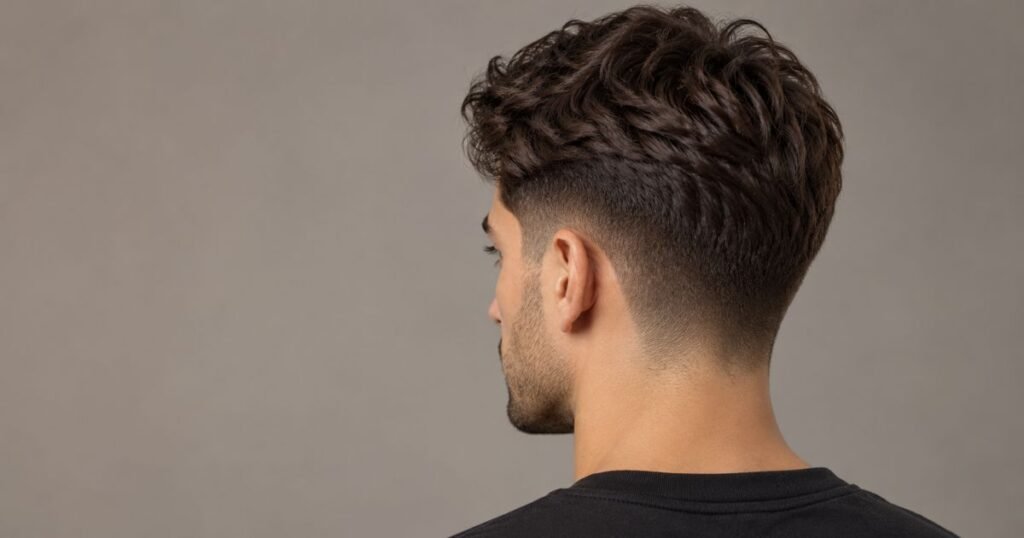
Two words do the work here. A taper is a gradual shortening of hair, usually toward the neckline and around the ears. A fade is a blend that finishes very short, often at or near bare skin. A low taper fade combines the two and confines the gradient to the lower part of the head: the sideburns, the area around the ears, and the nape. Above that zone, the sides stay noticeably longer and connect to the top.
Not every barber draws the line the same way. Some use “taper” for any gradual shortening that doesn’t reach skin, some use “taper fade” for a taper that does, and many use the terms interchangeably. That’s why the label matters less than three details: where the blend starts, how short it ends, and how it joins the top.
What a Low Taper Fade Looks Like From the Front, Side, and Back
Because the cut is low, it reveals itself in layers as someone turns their head.
- Front: You mainly see short, tidy sideburns and a narrow band of short hair at the temple edge. The top frames the forehead, so from straight on it can look like a well-kept regular haircut.
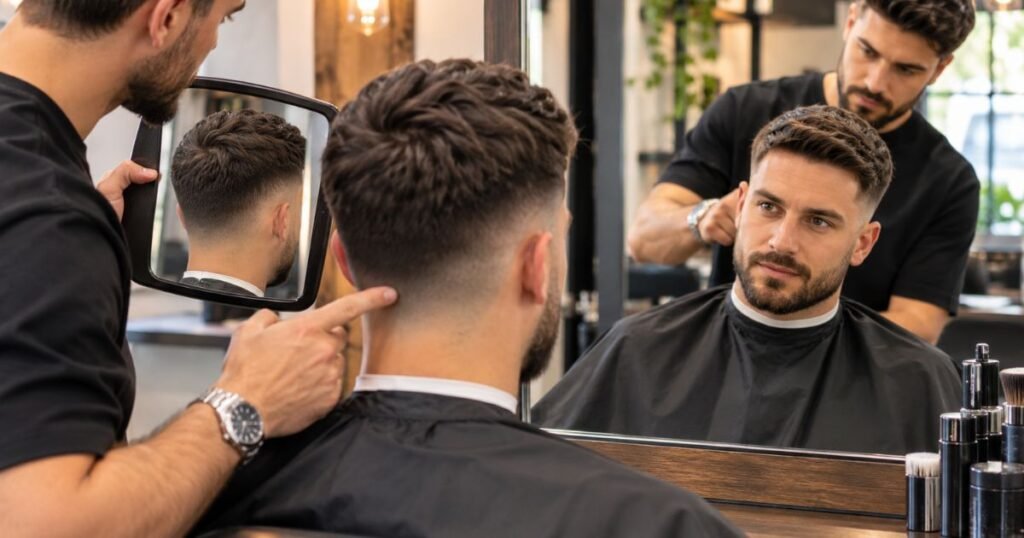
- Side: The gradient traces the curve of the ear, going from shortest near the ear’s rim to noticeably longer a short distance above it. This is the best angle for judging the blend. Look for a smooth change with no visible stripes.
- Back: The hair is shortest at the neckline and lengthens as it moves up the back of the head. The outline at the bottom (natural, rounded or squared off) changes the whole look from behind.
What to notice in photos: check whether the side shows a soft, smoky transition or distinct bands, and whether the shortest area stays low around the ear instead of climbing toward the temple.
Where Does a Low Taper Fade Start?
“Low” is relative, but there are useful landmarks. A low taper usually begins around ear level, often tracing just above the top of the ear and curving back toward the nape. A mid taper begins closer to the temple, and a high taper starts near or above it. Barbers often place the start relative to the spot where the head curves from side to top, so the same instruction can land slightly differently on different head shapes.
Several things change how the same start line reads: how much your ears stick out, the shape of your head, and where your hairline sits at the temples. If you’re unsure, point to the exact spot on your own head or on a photo. A fingertip is a more precise instruction than the word “low.”
Does a Low Taper Fade Go Down to the Skin?
It can, but it doesn’t have to. Start height and finishing length are two separate choices. The shortest part of the taper can be bare skin, a faint shadow of stubble, or a short but visible length. A skin finish looks crisper and shows more scalp. A longer finish looks softer and is easier to wear if your workplace, school or personal taste leans conservative.
A few things influence the decision: how much scalp shows through your hair on the sides, how sensitive your skin is to close shaving, and how quickly you want the cut to look grown out. The guard section later in this guide explains the options in more detail.
Low Taper Fade vs. Low Fade vs. Mid Taper
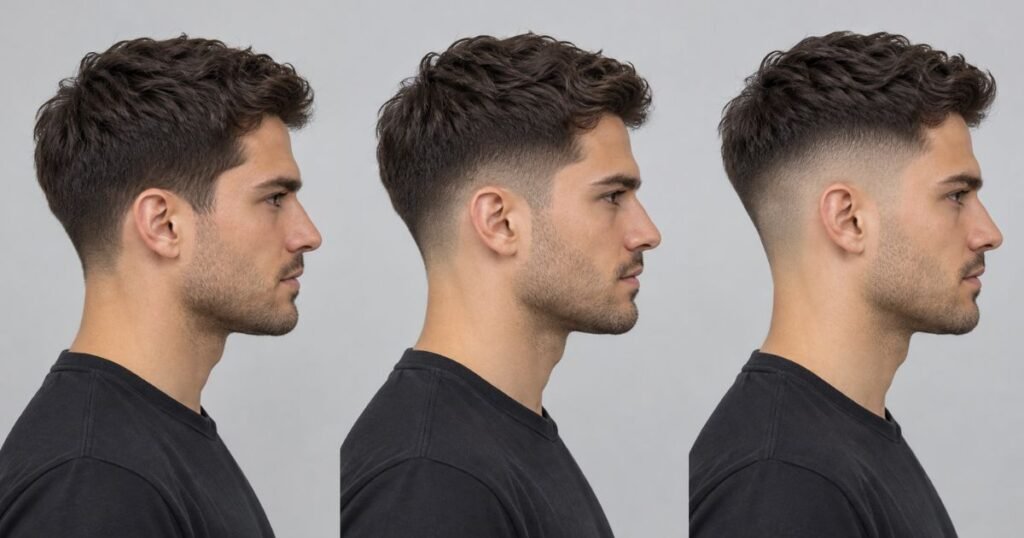
These cuts share a family resemblance, and the terms overlap in practice. The table shows general tendencies, not a rulebook. Barbershops don’t share one vocabulary, so treat it as a map for conversation.
| Cut | Where the gradient starts | Typical shortest length | Contrast with the top | How it tends to grow out |
| Low taper fade | Around ear level, curving to the nape | Varies: skin to a short guard | Low to moderate | Neckline and sideburns soften first |
| Low fade | Also low | Often skin or very close to it | Moderate, with a more visible gradient | Stubble shows sooner |
| Mid taper fade | Around the temple | Varies | Moderate to high | Growth shows across more of the side |
| High taper | At or above the temple | Varies | High | The short area is large, so growth is easy to spot |
| Classic taper | Low on the sides and neck | Usually left longer, rarely skin | Low | Softest transition as it grows |
Low Taper Fade vs. Low Fade
Both begin low, so the difference is mostly about the finish. A low fade usually goes shorter, often to skin, which makes the gradient longer and more visible. A low taper fade is often more restrained, with the shortest length a little longer or confined to a smaller area. In real barbershops the two names are frequently swapped.
The practical fix is to name the shortest length you want rather than rely on either label. If you work somewhere with a stricter dress code, or you don’t want much scalp showing, a softer finish may suit you better. Fine hair or light hair color can make a skin finish more noticeable.
Low Taper Fade vs. Mid Taper Fade
The main difference is how much of the side of your head is short. A mid taper starts around the temple, so more of the side is tapered and the separation from the top is more obvious. A low taper keeps most of the side at length.
A lower start may suit you if:
- you want the cut to look like a neat, regular haircut
- you’d like the side to keep some bulk near the upper ear
- you prefer a grow-out that doesn’t look abrupt
A mid start may suit you if:
- you want more contrast between the sides and the top
- you’d like the top to look more prominent
- you don’t mind returning to the barber more often to keep the shape
Head shape and temple hairline affect how each reads, so a photo of someone with similar proportions helps.
Low Taper vs. High Taper
A high taper pushes the start up to the temple or above, which creates the strongest contrast of the three heights. More scalp shows, the top looks more pronounced, and the temple hairline gets more attention. Growth shows more quickly because a larger area is kept short. Everything said about the mid taper applies here, only more so. If you’re deciding between low and high, picture how much of your side you’re comfortable seeing in the mirror every day.
Low Taper vs. Classic Taper
A classic taper is the traditional version: the hair shortens gradually down the sides and neck, usually without reaching skin, and is often finished with scissor-over-comb, a technique where the barber cuts the hair with scissors over a comb to soften the transition. A low taper fade adds a more defined fade near the ear and nape, often with a closer finish. In the UK you may hear “short back and sides” for a traditional short cut. It’s a broad term that can include a taper but doesn’t always.
If you want the least contrast possible, ask for a classic taper and say you don’t want skin showing. If you want a closer finish at the ears and neck, a low taper fade is the usual request.
Low Taper Fade Types and Variations
The variations below change the sides and back of the cut. The top styles come later in the gallery. You can mix and match: for example, a skin finish with a natural neckline, or a temple taper with a drop-shaped back.
Low Taper Fade vs. Low Skin Taper Fade
In a standard low taper fade, the shortest area keeps a trace of hair, whether that’s a faint shadow or short stubble. In a low skin taper fade, the shortest area is shaved to bare skin, usually with a foil shaver or razor, so the gradient runs from skin up into hair. The skin version looks sharper and shows the blend more clearly. The non-skin version looks softer and shows growth later. Who each suits is covered in look #22.
Low Taper Fade with a Temple Taper
A temple taper shortens the hair around the temple and sideburn so the edge of your hairline looks tidy. It’s gentler than a temple fade, which usually goes shorter and higher. You can pair it with a line-up, a crisp edge cut along the hairline with a trimmer or razor.
Hairline shape matters here. If your temples recede, a cowlick sits near the front, or you have a widow’s peak, tell your barber, since tapering that area can either soften or emphasize those features depending on how it’s done.
Low Taper Fade with a Natural Tapered Neckline
The neckline is the outline of hair at the back of your neck. There are three common shapes: blocked, with a straight horizontal edge and sharp corners; rounded, with softened corners; and natural, where the barber tapers the nape but doesn’t cut a defined edge, letting the hair’s own growth line set the outline. A natural neckline grows out softly, which can look more relaxed between visits, though it won’t have the crisp look of a blocked one. Nape growth patterns, such as a low hairline or hair that grows in swirls, affect how neat a natural neckline looks.
Low Taper Fade with a Drop-Shaped Back Taper
In this version the taper line curves downward behind the ear instead of running level around the head, following the shape of the skull. It’s closely related to the drop fade, and terms vary between barbers. On a low taper, the drop is usually subtle. Head shape and the hairline behind the ear influence how noticeable the curve is, so a side or back photo is useful when asking for it.
Read More About : The Complete Guide to the Taper Fade Styles, Meanings, and Everything In Between
25 Best Low Taper Fade Haircut Styles for Men
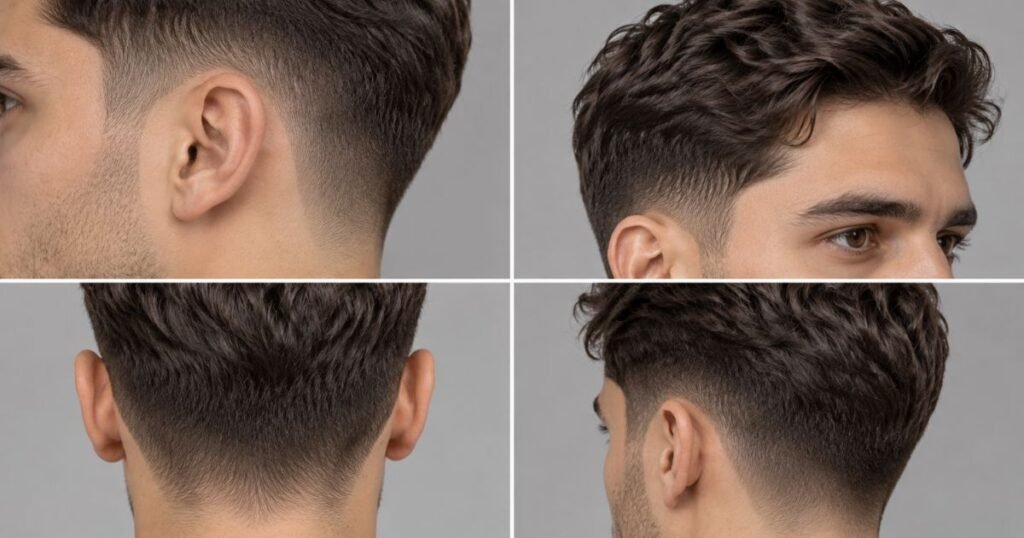
The looks below run from texture-led styles (1–5) through structured top styles (6–13), longer cuts (14–16), styles built around natural texture (17–20), and finishing details (21–25). “Best” here means well established, not ranked. Results depend on your hair and how your barber adapts the cut. Each entry ends with a starting-point line you can say or show.
| If you want… | Look at |
| The least morning effort | 10, 11, 24, 25 |
| Short and conservative | 10, 11, 12, 25 |
| A top that needs real length | 6, 8, 9, 14, 16 |
| To work with natural curl or coil | 1, 17, 18, 19, 20 |
| A softer grow-out | 24 |
| To wear it with a beard | 23 |
| The most styling effort | 9, 16, 20 |
Low Taper Fade with Curly Hair
The taper handles the sides and nape while the curls stay on top. Curly hair springs up as it dries, so an inch or two of length can look noticeably shorter than it measures when wet and stretched. Leaving enough length lets curls form properly, and the taper stops them from widening around the ears. Curl cream or gel applied to damp hair, followed by air drying or a diffuser, usually helps definition. Some barbers prefer cutting curls dry so they can see the natural pattern.
Ask your barber: “Low taper fade, keep my curl pattern intact on top, and leave the upper sides slightly longer so it blends rather than steps.”
Low Taper Fade with Textured Fringe
The top is cut so the front falls forward onto the forehead with broken-up ends, a result of point cutting, where the barber snips into the ends rather than cutting straight across. The pieces separate instead of forming one solid edge. A small amount of matte clay or paste adds definition. Forehead height and hairline matter: a cowlick at the front can push the fringe sideways or up, so your barber may need to adjust the cut around it.
Ask your barber: “Textured fringe, point-cut ends, sitting just above the eyebrows, with a low taper on the sides.”
Low Taper Fade with Straight Hair
Straight hair has no wave to break up the transition, so the taper reads very clearly, and so does any unevenness in it. The top can lie flat, especially if your hair is fine. Layers or point cutting may add lift, and a texturizing powder or sea salt spray can help at the roots. Thick straight hair may need weight removed so it doesn’t flare outward over the tapered sides.
Ask your barber: “Low taper fade, with some texture cut into the top so it doesn’t sit flat.”
Low Taper Fade with Wavy Hair
Wavy hair needs enough length for the waves to show. Cut too short, it can look straight or messy; left a few inches long, the wave pattern often appears. The taper keeps the sides from puffing out over the ears. Lightweight cream or sea salt spray on damp hair, then air drying or diffusing, usually works better than heavy hold. Humidity can add frizz, so a smoothing cream may help. This is different from the brushed waves in look #17.
Ask your barber: “Low taper fade with enough length on top for my natural wave to show.”
Low Taper Fade with a Messy Top
This look relies on layers and uneven lengths, so the ends separate naturally with no committed direction or hard part. It looks lived-in, but the cut underneath does the work. A small amount of texture powder or clay, ruffled in with the fingers, is usually enough. Straight to wavy hair tends to suit it; very fine hair may need a volumizing product. Unlike the textured fringe, the top isn’t pushed forward.
Ask your barber: “Low taper fade, with a layered, loose top. Nothing forward or parted.”
Low Taper Fade with a Slick Back
The top is combed backward off the forehead, and the tapered sides help the outline stay tight against the head. Most hair needs around three inches (7 cm) or more to comb back well, though it depends on thickness and growth direction. Water-based pomade adds shine; clay keeps it matte. Receding temples and thinning at the front become more visible when hair is swept back, and a cowlick at the hairline can resist the direction. Compared with a pompadour, it’s flatter and smoother.
Ask your barber: “Low taper fade, with enough length on top to comb straight back.”
Low Taper Fade with a Side Part
The top is combed to one side along a visible part line. A soft part follows where the hair naturally falls, while a hard part is a thin line cut into the hair with a trimmer. A comb and a medium-hold pomade or cream give the neatest result. Your natural parting direction matters, since fighting a cowlick tends to be frustrating. A hard part needs frequent touch-ups.
Ask your barber: “Low taper fade with a natural side part on the side where my hair falls.”
Low Taper Fade with a Quiff
A quiff lifts the front section upward and back, with the sides kept shorter. The front is usually several inches longer than the sides. Drying the hair upward from the roots with a blow dryer, then finishing with a mid-hold product, builds the lift. Density and hairline influence the result: thin hair may collapse, and a high forehead may exaggerate the height. It’s more relaxed than a pompadour and less voluminous than a blowout.
Ask your barber: “Low taper fade with a quiff. Long enough at the front to lift, and shorter on the sides.”
Low Taper Fade with a Pompadour
The pompadour is the most sculpted of the lifted tops: a tall, rounded roll of volume at the front, swept up and back. The tapered sides emphasize the height. It typically needs noticeably more front length than a quiff, plus a blow dryer, a round brush and a stronger hold. That makes it a high-effort style. Thick hair holds the shape more easily; fine hair may need volumizing help.
Ask your barber: “Low taper fade with a pompadour. Keep a lot of length at the front and blend the sides into it.”
Low Taper Fade with a Buzz Cut
In a buzz cut, the whole top is clipped to a single guard length. A low taper makes the sides and nape a little shorter, so it reads as subtle shaping around the ears. The contrast with the top is small, which is part of the appeal. Head shape and scalp visibility matter more here, since there’s no length to hide either. The top is a single guard number, which differs from the crew cut that follows.
Ask your barber: “Buzz cut with a #3 on top (or your preferred guard) and a low taper at the ears and neckline.”
How to Choose the Right Low Taper Fade for Your Hair Type
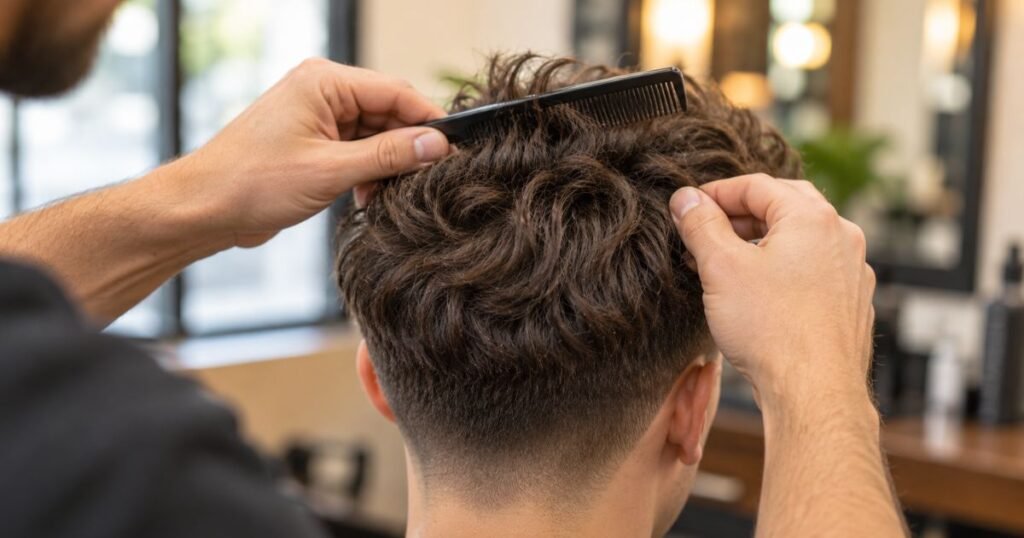
Hair type isn’t just straight versus curly. Four traits shape how a taper behaves: strand thickness (how wide each hair is), density (how many hairs sit in a given area), curl pattern, and growth direction. Most people sit somewhere on a spectrum, so treat the table below as starting points for a conversation with your barber, not a diagnosis.
| Hair characteristic | Often worth prioritizing | Worth asking about | Watch for |
| Straight | Texture and lift on top | Layering or point cutting | A flat top, or sides that flare over the taper |
| Wavy | Enough length for waves to form | How much length the waves need | Frizz and puffiness at the sides |
| Curly | Moisture and curl definition | Experience cutting curls | Shrinkage, and tapers that look abrupt |
| Coily | Shape and moisture | A defined outline and finish | Dryness, razor irritation with a skin finish |
| Fine | Volume without heaviness | Keeping the upper sides longer | Scalp showing through if cut too short |
| Thick or dense | Weight control at the sides | Gradual blending | Bulk over the ears |
Low Taper Fade for Straight Hair
The main question with straight hair is whether the top will lie flat. If it does, ask for internal texture, meaning the barber removes small amounts of weight inside the hair so it moves and lifts. Strand thickness decides a lot: fine straight hair can collapse with even a little product, while coarse straight hair can stick out at the sides. Crown whorls and cowlicks can push straight hair in unwanted directions, so tell your barber where yours sit.
Ask your barber: “I have straight hair. Add texture on top and tell me if you’d adjust the taper height.”
Low Taper Fade for Wavy Hair
Wavy hair needs enough weight and length to show its pattern. Too short and it can look straight; too long and the weight can pull the waves flat. The taper keeps the sides from flaring out over the ears. Frizz and humidity play a role, so a lightweight cream or a bit of sea salt spray may help, and air drying or diffusing tends to work better than rough towel drying.
Ask your barber: “I have natural waves. Leave enough length on top and keep the taper soft.”
Low Taper Fade for Curly Hair
Curls shrink as they dry, so the top often ends up shorter than it was when you left the chair. A lower start for the taper keeps more curl volume on the upper sides, which can avoid a harsh contrast with the top. Moisture and a curl-defining routine matter more than the cut itself. It’s fair to ask whether your barber is comfortable cutting curls, and whether they prefer cutting them wet or dry.
Ask your barber: “My curls shrink, so please leave extra length, and blend the sides into the curls softly.”
Low Taper Fade for Coily and Afro-Textured Hair
Coily hair has strong shrinkage, a tendency toward dryness and often high density. A low taper can frame shapes like an afro, twists or waves, giving them a defined edge. A skin finish can irritate skin where tightly curled hair grows back in; if bumps recur, see a dermatologist rather than just trying more products. A barber who works with your texture regularly can help you choose the finish, the neckline and the outline.
Ask your barber: “I want a low taper that frames my natural shape. Let’s pick the shortest length based on how my skin reacts.”
Low Taper Fade for Thick or Fine Hair
Thickness and density are different. Thick describes each strand’s width, and dense describes how many strands there are. You can have fine hair that’s very dense, or thick hair that’s sparse. Thick or dense hair often bulks out above the ears, where a gradual taper and some weight removal can help the shape sit closer to the head. Fine hair can look flat or reveal scalp if it’s cut too short on the sides, so keeping the upper sides a little longer and adding texture on top may help.
Ask your barber: “My hair is [thick / fine / dense]. Please adjust the guard sizes and weight on the sides to suit.”
Which Low Taper Fade Suits Your Face Shape?
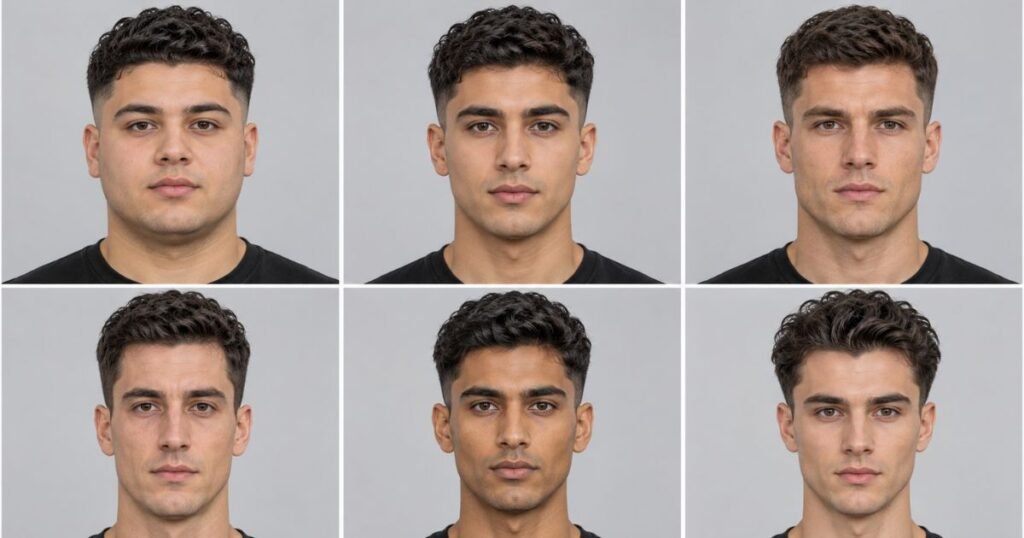
Face shape is only one input. Head shape, hairline, ear position, hair type and beard all affect how a cut looks. Also, a low taper frames the sides near the ears, so the top style and length usually shift the balance of your face more than the taper itself.
To estimate your shape, pull your hair back and look in a mirror. Compare the width of your forehead, cheekbones and jaw, and the length of your face against its width. Many faces fall between categories, so use the closest match and treat the guidance as options to discuss, not rules.
| Face shape | Balance people often aim for | Options to discuss |
| Round | More vertical emphasis | Some height or structure on top |
| Oval | Few constraints | Choose by hair type and lifestyle |
| Square | Softening or embracing angles | Textured tops or a sharper finish |
| Long and rectangular | Less added height | Moderate length, some width |
| Diamond | Balance at the forehead and chin | Fringes, tapered sides |
| Heart | Balance a wider forehead | Side-swept fringe, a beard |
Low Taper Fade for Round Faces
A round face has similar width and length with soft edges. Many people with round faces choose tops with some height or definition, such as a quiff or textured fringe, to add vertical emphasis. A very flat top that adds width at the sides is another option, but it’s a style choice and not a rule. A low taper keeps the sides slim, which may support this.
Low Taper Fade for Oval Faces
Oval faces are slightly longer than wide with a gently curved jaw. They’re often considered adaptable, which means the choice depends more on hair type, hairline and lifestyle than on face proportions. That doesn’t guarantee every top style will work, but it gives you room to try several.
Low Taper Fade for Square Faces
A square face has a strong jaw with similar forehead and jaw widths. Some people soften the angles with a textured fringe or loose top, while others prefer a sharper cut that emphasizes the structure. Both are valid. The low taper doesn’t change the jawline, so the top and any beard are what to talk through.
Low Taper Fade for Long and Rectangular Faces
A long or rectangular face is noticeably longer than it is wide. Some people avoid adding much height on top and instead choose moderate length with a fringe or side-swept shape. A low start for the taper keeps the sides fuller than a higher one, which can add a little width. If your face is long, bring a photo of someone with similar proportions.
Low Taper Fade for Diamond Faces
A diamond face has wider cheekbones with a narrower forehead and chin. A fringe or textured top can add width to the forehead area, and a taper that stays low keeps the area around the ears from adding extra width. Beard shape can also help balance the narrower chin.
Low Taper Fade for Heart-Shaped Faces
A heart-shaped face has a wider forehead tapering to a narrower chin. A side-swept fringe or medium-length top can soften the forehead, while a beard may add some weight to the jaw. A low taper keeps the sides slim near the ears, which works with a narrower lower face. Hairline shape and hair type still affect how any of this looks.
How to Ask Your Barber for a Low Taper Fade
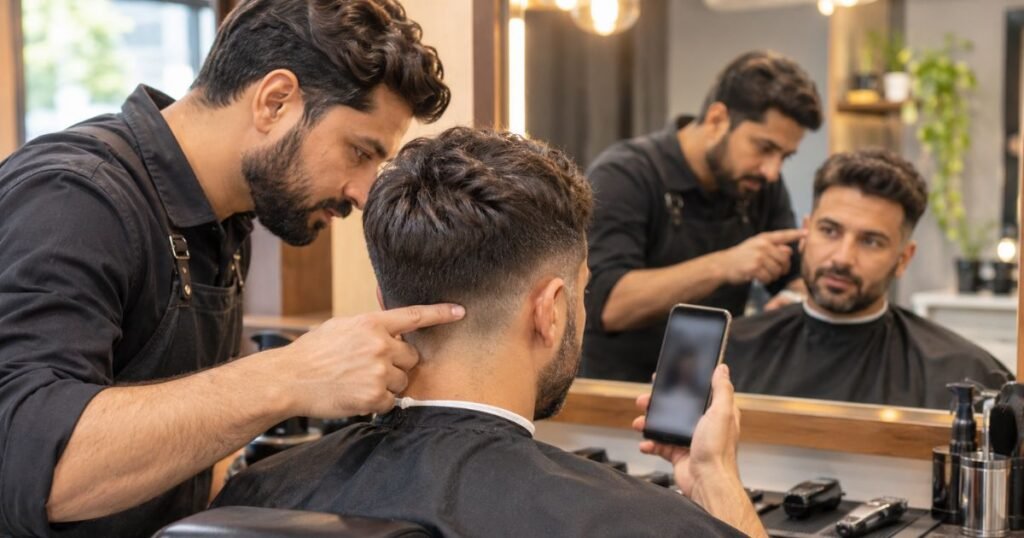
No phrase guarantees the same result at every barbershop, but making a handful of decisions beforehand gets you much closer. Before the appointment, settle these:
- How low the taper starts
- How short it finishes
- How much length stays on the sides and top
- Which neckline you want
- Whether you want extras such as a line-up, a temple taper or a beard blend
One quick definition: a guard is a plastic attachment that clips onto clippers and sets the cutting length, and a higher number leaves more hair. The next section has the full chart.
Decide How Low You Want the Taper
Describe the start in landmarks instead of adjectives. “Around the ear, not above the temple” is much clearer than “not too high.” Better still, point to the exact spot on your head or on a photo, and say the short hair should stay below it. Starting points vary between barbers and head shapes, so this single gesture prevents a lot of misunderstandings.
Choose Between Skin, Zero, Half Guard, and Number 1
This is the finishing length at the shortest part of the taper. A quick guide:
- Skin: Shaved to bare skin. The sharpest and most visible finish, with the fastest stubble.
- Zero: Cut very close with the clippers, leaving a faint shadow. Many people use “zero” and “skin” interchangeably, so confirm.
- Half guard (0.5): Short stubble of roughly 1.5 mm. Softer than zero, with little scalp showing.
- Number 1: About 3 mm, a visible but very short length. The gentlest of the four.
Guard sizes vary by brand and by country, so show a photo if you can. The guard section covers the differences in more depth.
Explain How Much Length to Keep on the Sides and Top
“Not too short” means something different to everyone. Use numbers or show with your fingers: an inch is roughly the length from the tip of your thumb to the first knuckle. You might say “two inches (5 cm) on top” and “about three-eighths of an inch (10 mm) on the upper sides.” Mention how the sides above the taper should meet the top, since a clear join looks smoother than a sudden step.
Choose a Natural, Rounded, or Squared Neckline
A natural neckline follows the hair’s own edge and grows out softly. A rounded neckline has curved corners and looks tidy without being severe. A squared or blocked neckline has a straight edge and sharp corners; it looks crisp when fresh but shows growth sooner. Name the one you want, or show a back view photo, so the barber doesn’t choose for you. For definitions, see the types section above.
Show Your Barber the Right Reference Photos
Photos remove guesswork, but the right ones matter.
- Bring front, side and back views if possible.
- Choose someone with hair texture and density similar to yours.
- Avoid heavily filtered or heavily lit images that hide the blend.
- Add a “not this” photo if there’s a version you want to avoid.
- Ask the barber what they would change for your hair, face and hairline.
How to Specify the Taper Height and Side Weight
Start height tells the barber where the short area begins. Side weight is different: it’s how much hair stays on the upper sides, above the taper. More weight means a fuller, bulkier side; less weight means a flatter one. Related terms you may hear are connected, meaning the lengths step smoothly from the sides to the top with no visible break, and disconnected, meaning there’s a deliberate step between them.
If your hair is thick or dense, you might ask to take some weight out. If your hair is fine, you might ask to keep weight on the upper sides so the scalp doesn’t show through. Barbers also have tools and techniques you don’t have to name, such as clipper-over-comb to blend and scissor-over-comb to soften, so describing the result is enough.
A Simple Low Taper Fade Barber Script
Fill in the brackets and adjust to your own hair:
“I’d like a low taper fade. Start the taper around [ear level / just above the ear] and keep it low. Finish at [skin / zero / half guard / a number 1]. Keep the upper sides around [length] so they connect to the top, and leave about [length] on top. I’d like a [natural / rounded / squared] neckline [with / without] a line-up. I have [your hair type or concern, such as a cowlick at the crown], so let me know if you’d change anything.”
A UK-friendly version: “Could I have a low taper on the back and sides, finishing at a [grade 1 / skin], blending into [length] on top? Natural neckline, please. I’ve brought some photos.”
If your hair is curly or coily, add how much length you want after shrinkage. If it’s fine, mention you want to avoid scalp showing. If it’s thick, ask how they’ll handle weight at the sides.
Low Taper Fade Guard Numbers Explained
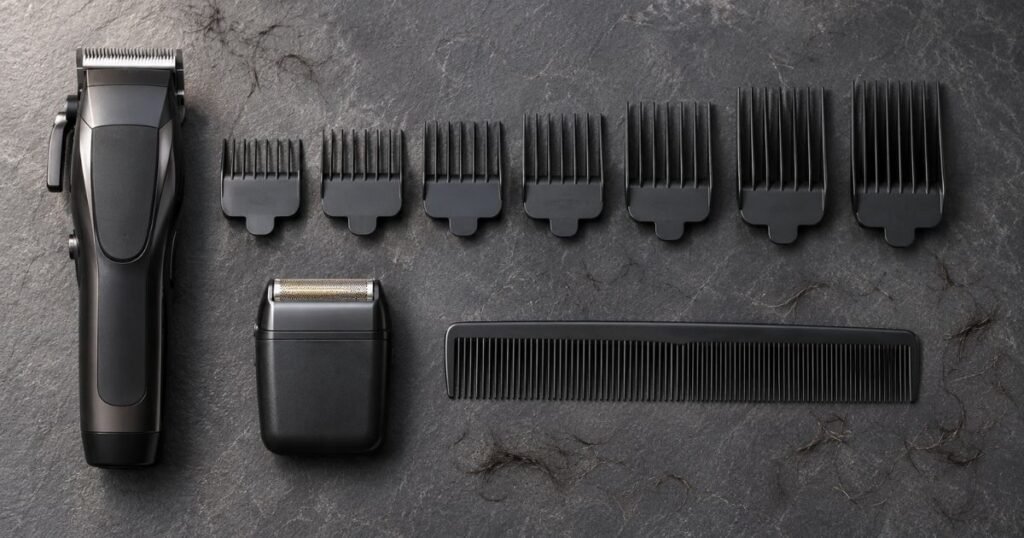
Guards are the attachments that set clipper length. Barbers also work without them, using the clipper lever (which adjusts the blade gap), clipper-over-comb, or scissor-over-comb, so numbers help you communicate but don’t describe the whole technique. The chart below is approximate. Brands, countries and clipper models differ, and UK clippers often label sizes in millimeters, so confirm with your barber’s own guards.
| Setting | Approximate length | How it typically looks |
| Skin (shaver or razor) | 0 mm | Bare, smooth skin |
| Zero (no guard) | Under about 1 mm | A faint shadow of stubble |
| 0.5 (half guard) | About 1.5 mm (1/16 in) | Very short stubble |
| 1 | About 3 mm (1/8 in) | Short and soft, with some scalp visible |
| 2 | About 6 mm (1/4 in) | Short but clearly hair-covered |
| 3 | About 10 mm (3/8 in) | Noticeably longer, a common upper-side length |
| 4 | About 13 mm (1/2 in) | Short hair with visible bulk |
What Guard Number Is Best for a Low Taper Fade?
There isn’t a single best number. It depends on how short you want the finish, how much length you keep above it, and how your hair behaves. These are examples, not rules:
- Subtle: finishing around a 1 or 2 and blending into longer sides. Little scalp shows.
- Visible but soft: finishing around zero or 0.5 and blending into the upper sides.
- Crisp: finishing at skin and blending upward.
Density, scalp visibility and dress code all influence the choice. Fine or light hair may show scalp through even a 1, while dense hair may look much fuller at the same setting.
Understanding the Difference Between Skin, 0, 0.5, and 1
Skin is the only one of these that leaves no stubble, because it’s shaved. Zero is cut with clippers and leaves a faint shadow. Zero and skin are sometimes used interchangeably, which is why confirming matters. A half guard leaves very short stubble that still lets some scalp show through, and a 1 leaves a visible short length that reads as hair rather than shadow. The step from one to the next is small, but on a low taper that small step changes how crisp the cut looks and how soon it grows out.
How the Taper Blends Into Longer Side Hair
A blend is a stepped sequence of lengths. The barber starts with the shortest setting near the bottom and works upward with progressively longer ones, using clipper-over-comb or lever adjustments to feather each transition, and sometimes scissor-over-comb for the upper section. A good blend looks like a smooth gradient with no visible edges. Banding is the term for visible stripes where one length stops and the next begins. It usually comes from a large jump between lengths or a rushed finish, and it can show more readily on fine, straight hair. If you spot banding after a cut, go back and ask the barber to soften it.
How to Style and Maintain a Low Taper Fade
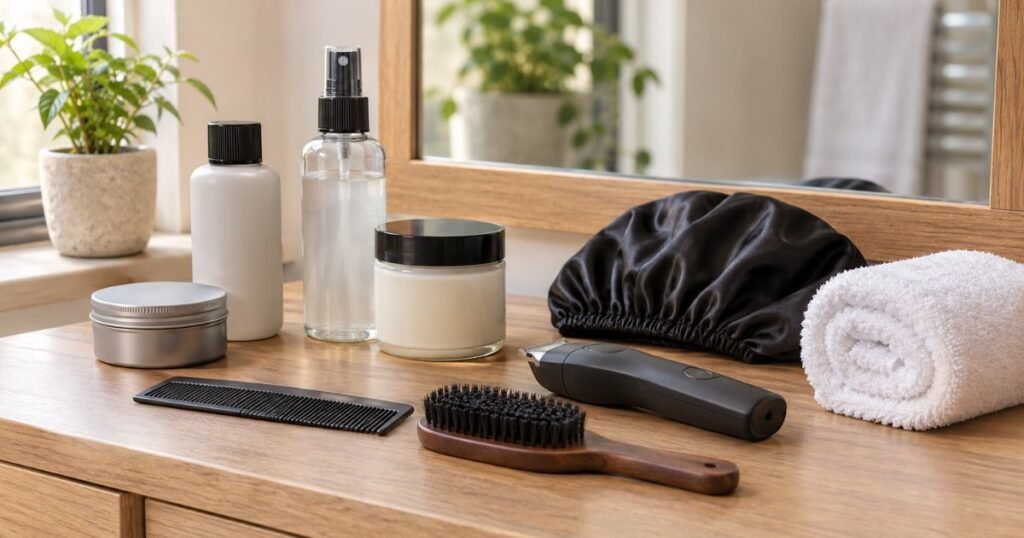
The taper only looks tidy if the top and the edges are cared for. Styling is mostly about the top, so what you do depends on its length and your hair type. Maintenance is mostly about how fast the tapered area grows in.
Best Styling Products for Different Hair Textures
Product types depend on texture and on the finish you want. The table lists categories, not brands. Start with a small amount and add if needed.
| Hair texture | What you may want | Product types to consider | Watch for |
| Straight | Lift and texture | Texture powder, matte paste, sea salt spray | Heavy waxes can weigh hair down |
| Wavy | Definition, less frizz | Lightweight cream, sea salt spray, light gel | Heavy products can flatten waves |
| Curly | Moisture and curl definition | Curl cream, leave-in conditioner, gel | Brushing dry curls can cause frizz |
| Coily | Moisture and shape | Leave-in conditioner, cream, a light oil or butter | Too much can leave buildup |
| Fine | Volume | Texture powder, volumizing mousse | Rich creams weigh hair down |
| Thick or dense | Control | Styling cream, firmer clay or paste | Too little hold lets the shape expand |
How Often Should You Get a Low Taper Fade?
There’s no fixed rule. A commonly cited average for hair growth is around half an inch (about 1 cm) a month, though individual rates vary. At that pace, a short finish can show noticeable growth within roughly a week or two, and the sooner you notice, the sharper you like your cuts. A skin finish and a squared neckline show it first. A longer finish and a natural neckline tend to look acceptable for longer.
Here’s what usually changes first:
- The neckline loses its edge, and stubble appears on a skin finish.
- The blend around the ear loses definition.
- The shortest area gets longer, so the gradient flattens.
- The top lengthens and the overall shape changes.
The right interval is when it stops looking the way you like it. Ask your barber what they’d suggest for your hair and finish.
How to Keep the Neckline and Sideburns Clean
Between visits, a trimmer can tidy stray hairs below your neckline. Work slowly, use a mirror, and stay on the neckline itself. Sideburns are harder to match on both sides, so be cautious if you try them. Leave the blend itself to the barber, since re-blending at home often leaves uneven patches. Keep tools clean, avoid picking at stubble, and go gently around sensitive skin. If you get recurring ingrown hairs or bumps, a doctor or dermatologist can advise.
What a Low Taper Fade Looks Like as It Grows Out
In appearance rather than weeks, the cut tends to go through three phases. First, the neckline blurs and stubble thickens on a skin finish. Second, the ear arc softens and the gradient flattens. Third, the sides look uniformly shaggy and the top lengthens, so the overall shape is lost. Because the low taper keeps a smaller area short than a mid or high taper, it often looks less abrupt as it grows, and a natural neckline grows out especially softly. If you’re letting it grow, ask for a tidy-up or a slightly longer finish next time.
How to Maintain a Low Taper Fade Between Barber Visits
- Wash according to hair type. There’s no universal frequency, so base it on oil, product use and texture.
- Condition mid-lengths and ends, not the roots, if your hair goes flat easily.
- Clarify occasionally if product buildup makes hair dull or limp.
- Protect textured hair at night with a satin cap or pillowcase if it suits you.
- Protect exposed scalp from the sun if you have a skin finish.
- Avoid picking or shaving the blend at home.
Common Low Taper Fade Mistakes and How to Avoid Them
Most disappointing results trace back to a misunderstanding, not bad technique. Each mistake below has a quick fix you can use in the chair.
Getting a Low Fade Instead of a Low Taper
What happens: You wanted a soft, restrained finish and leave with a closer, more visible fade, because the two names overlap.
How to avoid it: State the shortest length you want, say where the taper starts, and show a photo. Those three details settle the question regardless of what the barber calls it.
Cutting the Taper Too High
What happens: The short area creeps up toward the temple, which turns a low taper into a mid or high one, with more contrast and faster visible growth.
How to avoid it: Point to the landmark, around the ear, before the clippers start. If the line climbs, speak up early, because it’s much easier to adjust upward than to restore hair.
Choosing the Wrong Shortest Guard
What happens: A finish that’s too short exposes more scalp or irritates your skin. One that’s too long can look blurry when you wanted a crisp edge.
How to avoid it: Think about scalp visibility, skin sensitivity and how you want it to look in two weeks, not just on day one. If you’re unsure, start a step longer, since the barber can always go shorter next time.
Removing Too Much Length From the Upper Sides
What happens: Cutting the sides short too high up disconnects them from the top. Long hair can look as if it sits on the head instead of belonging to it, and fine hair can look thin.
How to avoid it: Ask to keep length above the taper and say you want the sides to connect to the top. If your hair is thick, ask for weight removal instead of a shorter length.
Choosing the Wrong Reference Photo
What happens: The photo shows hair with a different texture, density or hairline, so the same cut looks different on you. Filters and lighting can also hide the blend.
How to avoid it: Pick references that resemble your hair, include more than one angle, and ask the barber what they’d adapt. A photo is a starting point for a conversation.
Frequently Asked Questions About Low Taper Fades
Is a Low Taper Fade Good for Everyday Wear?
Often, yes. The edges stay neat and the top can go from casual to dressed up depending on how you style it. How well it works day to day depends on the top you choose, your hair type and how much styling you’re willing to do. A short textured top takes seconds, while a pompadour takes much longer.
Is a Low Taper Fade Suitable for All Hair Types?
It’s adaptable, but the details change with texture, density and growth patterns. Straight, wavy, curly and coily hair can all wear it, with adjustments to length, finish and styling. It isn’t guaranteed to suit everyone, so see the hair type section for decisions to discuss with your barber.
Does a Low Taper Fade Look Good With Long Hair?
It can. The sides and nape are tidied while the top stays long, which can keep longer hair looking more intentional. It depends on length, density and how the upper sides are blended into the top. Look #14 explains the main detail to ask for.
How Long Does a Low Taper Fade Last?
There’s no single answer. It depends on how fast your hair grows, how short the finish is and how crisp you like it. The neckline and any skin finish show growth first, and a longer finish with a natural neckline tends to look acceptable for longer. See the maintenance section for what changes and when.
Is a Low Taper Fade Easy to Maintain?
It’s manageable but not zero-effort. The taper needs periodic visits to stay defined, and daily styling depends on the top, from almost nothing for a crew cut to a lot for a pompadour. Choosing a longer finish and a natural neckline generally reduces upkeep.
Can You Get a Low Taper Fade Without Showing Skin?
Yes. Ask for a longer shortest length, such as a 1 or 2, so the taper blends into short hair instead of bare skin. It’s a softer look with less visible scalp, and it may suit fine hair or stricter dress codes. The guard section covers the options.
Can You Do a Low Taper Fade at Home?
It’s difficult. The blend is the hardest part, since it relies on consistent clipper technique and the ability to see the back and sides of your head. Light neckline tidying is lower risk. Re-blending the fade yourself is the step most likely to leave uneven patches, so it’s usually better left to a barber.
Conclusion
The low taper fade works because it’s flexible: the sides and nape stay tidy while the top can be anything from a buzz cut to a full afro. Getting a result you like comes down to three actions.
- Decide the structure. Pick where the taper starts and how short it finishes.
- Choose a top that fits your hair. Consider texture, density, hairline and how much styling you want.
- Show and measure. Bring reference photos from several angles and give lengths in numbers, not adjectives.
A good barber will adapt the cut to your head, so treat the script in this guide as a starting point for the conversation.